
What We Can Know v. The Passenger Seat
presented by

MARCH 9, 2026 • OPENING ROUND
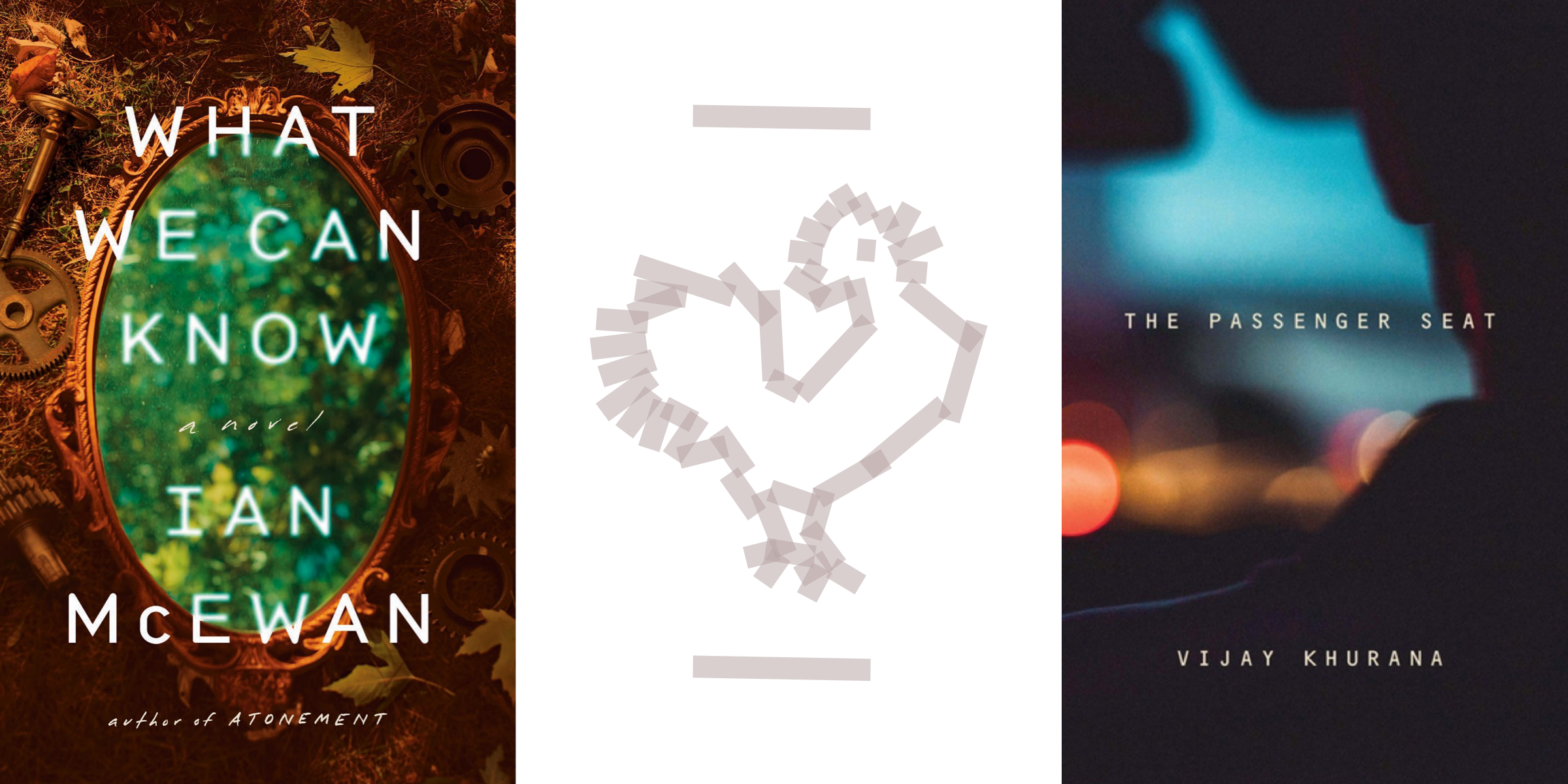
What We Can Know
v. The Passenger Seat
Judged by Tomi Onabanjo
Tomi Onabanjo is a doctoral candidate in the Dept. of History at New York University (NYU). He is also a Primary Editor at the Journal of the History of Ideas (JHI) Blog, a Burbank-Cooper Research Fellow, and a former National Book Critics Circle (NBCC) Emerging Critic. His writing has appeared in The European Review of Books, the Chicago Review of Books, and Electric Literature. Known connections to this year’s contenders: None.
There’s no real harm in looking, right? Of course, of course: Everyone deserves their privacy; none more so than after a car crash. But the traffic is now halting; curiosity is now growing; and, quite frankly, there is no better view than in the passenger seat. Tragically avoidable mistakes have suddenly become an unavoidable spectacle. And, if everyone else is rubbernecking, why shouldn’t you?
A slow twist and the deed is done. With the scene beheld, unease quickly arises. Unease, not just from seeing the lives potentially lost and the lives undoubtedly changed. Unease, also, with yourself and your snaking sense of relief. You face forward and cannot help but think: Thank God that’s not me. Thank God I’m not driving.
The Passenger Seat (2025) by Vijay Khurana is about two teenagers—Adam and Teddy—who live in an unnamed town in an unnamed country (Canada, the most certain referent). In the summer before their senior year, they embark on a road trip. Their spontaneous departure is unexpected, but not wholly unplanned. Adam lives with his doughy and depressed father, with “wet eyes with which he tells the world he has given up.” He plays video games with an escapist’s fervor; abides by the cynical-cum-misogynistic nostrums found in “the book” (think: a manual for the red-pilled); and harbors a callous desire to dominate all those he deems inferior. “A whip for the horse, a bridle for the donkey, and a rod for the fool’s back,” Adam cooly reassures himself. “Most people deserve the rod, and those who don’t are rare to find.” A contemporary perversion of his namesake, he has longed to escape northward to his own Arctic Eden. There, he imagines a return to a prelapsarian purity.
In short, Adam is ugly; he is reprehensible; and with Khurana’s supremely poised handling, he is utterly legible. The novel offers perhaps the finest fictional rendering since Ben Lerner’s The Topeka School (2019) of one of the “angry young men” who have dictated so much—arguably, too much—of today’s political and cultural discourse. This portrait, by itself, makes for invaluable, if not necessarily revelatory, reading. However, where The Passenger Seat diverges—and, ultimately, warrants the utmost praise—is in Khurana’s spearing depiction of Teddy and the relationship between these two friends.
Teddy is, at first, gently pitiable more than anything. His family life is by no means perfect (his sister, aloof; his mother, puzzling; his father, cuckolded), but it’s better than Adam’s. He displays the hallmark insecurities of a boy groping toward maturity, unsure of how to act with his girlfriend and “petrified about not pleasing Ceecee, or not pleasing her enough.” His future is not necessarily exceptional—graduation, college, adulthood—but, on the whole, it’s socially acceptable. “Teddy is not thrilled by the prospect of manhood,” the omniscient narrator relays, “but he has not yet settled on an alternative. He is shopping for shortcuts. This is why he is here, and why he first started going to the bridge with Adam.” Teddy, clearly, doesn’t yet know how to sit in the driver’s seat.
Khurana, with his loupe-like insights and unforced prose, seamlessly captures Teddy as he navigates—and fails to navigate—the constant tension between passivity and intentionality. Or, in other words, the two roving poles for how one should be as a friend and how one should, simply, be. After acceding to Adam’s insistence that they drive north instead of south, for instance, Teddy seemingly overcorrects and decides they should stop to buy a rifle. When Adam tries to pay for half, Teddy disregards him and pays in full. And, as they drive and drink, joke and think, and, eventually, come across a campsite where, under Adam’s prompting, they choose to “fuck with” a vacationing young couple, it’s shocking, but not altogether surprising, to see who pulls the trigger.
The magnitude of this inevitable moment of violence stems from Khurana’s mastery of suspense. Like Flannery O’Connor, this suspense comes from signals tragically gone unheeded. But, unlike the grandmother in “A Good Man Is Hard to Find” (1953), Teddy’s the one who doesn’t listen to himself. In some form or another, the narrator frequently notes: “Teddy knows Adam is just repeating something said by one of the bearded guys he subscribes to. Teddy knows where Adam gets this stuff from, but it’s still a let-down when you catch out a conjuror.”
FROM OUR SPONSOR

If Teddy was, from start to finish, purely submissive to Adam and his will, the novel would not succeed. It would be too easy to look at Adam as the driving corruptor, the leading perpetrator. It succeeds because we know that Teddy knows Adam’s game. And, for lack of experience and, crucially, for lack of conviction, he still agrees to play along. This grating dynamic of contestation and acquiescence, unspoken competitiveness and cowardly companionship—thoroughly embedded in many male friendships, but also apparent in relationships writ large—is what makes Khurana’s novel so damningly arresting. Who hasn’t indulged a loved one and their fantasies? Who hasn’t preferred to sit back and let them steer with confidence? Who hasn’t regretted not stepping out of the car before it’s too late?
A former teacher of mine once wrote about the critic Arlene Croce and how “what she was reviewing was not a dance itself but an ‘afterimage’ imprinted in her mind.” Like many, my mind resembles a kitschy Little Trees™ car freshener, jerkily twitching at the slightest provocation. Increasingly, what I now consider “good” in fiction is how long the stilling “heat of the afterimage” lasts. In The Passenger Seat, possibly no image lasts longer—and more affectingly—than one after the couple’s murder. Here, the pacing slows, and nature quietens to a whisper. With Teddy and Adam back in the car, the narrator peers inside to describe how:
Teddy opens his eyes a moment later, before Adam has even made it into third, when the truck lurches to a stop in the road. He looks and listens wildly, trying to locate the latest panic. Adam says nothing but calmly unclips his own buckle and reaches past Teddy’s throat to the seat belt, which he pulls, smoothly and without it snagging even once, across Teddy’s body.
Only the sight of Meursault, fatefully sweating on that beach outside Algiers, has left me with such shard-like nausea. Similar to how this image has stayed with me well after first reading The Stranger (1942), one sticky summer in middle school, I know the same fate awaits this image of Teddy and Adam. The rest of the novel follows the fatal consequences of remaining buckled into the passenger seat or choosing to “escape from freedom.” And, in so doing, Teddy is, by the end, uncomfortably familiar.
Set between the early 22nd century and the early 21st, What We Can Know (2025) by Ian McEwan primarily follows the earnest academic Thomas Metcalfe who, in a quietly dystopian future—where “[w]hat’s remarkable in our time is how minimally English has changed, despite the upheavals of wars, pandemics, nuclear exchanges, the catastrophic Inundation and the Derangement”—searches for the text of a singular poem. Penned in our present by the esteemed Francis Blundy for his wife Vivien’s 54th birthday, the poem was read only once at a celebration enshrined by posterity as “the Second Immortal Dinner.” In the ensuing century, “A Corona for Vivien” has become “more beautiful for not being known.” In the vein of another recent “mystery novel of ideas,” McEwan unfurls a delightful but still weighty probing of—you guessed it!—what can we actually know about history, literature, and, by extension, ourselves. Through Thomas’s quest across time and, alongside Rose—his occasional professional and romantic partner—across a landscape now morphed by climate change, McEwan seeds an evergreen reminder: “Only amnesia,” Thomas observes, “permits the folly of a fresh undertaking.” Sometimes, the present needs us to forget so we can begin again.
Where The Passenger Seat’s main characters act out in nihilistic frustration at their lack of meaning, What We Can Know’s often suffer from too much meaning or the meaning they still vest in the power of art. As Khurana’s teenagers both intentionally and unintentionally lock themselves out from the world and reality, McEwan’s adults exist resolutely in the world, as the book’s two halves and shifting narrative perspectives alight upon love gained, love lost, and everything else that comes with truly allowing oneself to relate to others. Where the former wears its subject matter heavy, almost like a leaded locket, the latter wears its concerns light, more akin to a glow-stick ringed around your neck. “Ian Macabre” has left his moniker for someone else in this matchup. Every favorable review—and there have been a few—is well earned.
With that said, I choose The Passenger Seat. What We Can Know makes for far more enjoyable reading. However, the experience of The Passenger Seat—from its charged premise to unerring execution—proved one of those rare and unforgettable times where, like a guilt-ridden rubbernecker, I couldn’t look away, no matter how badly I wanted to. And, when I did look away (read: finish the book), I was left to ask: If we can know so much about these boys, all these stunted men, why has nothing changed? If we can know enough about why they do it, why do so many of us still allow this violence to happen? “He needed someone in the passenger seat,” Adam himself concedes, “or he would never have made it this far.” At this point, who’s really to blame?
Advancing:
The Passenger Seat
Match Commentary
with Kevin Guilfoile and John Warner
John Warner: Kevin, have you seen this guy called “Clavicular?” He is a “looksmaxxing” influencer who has become mainstream famous enough to be profiled in the New York Times and GQ. His moniker is a reference to what is apparently the perfect width between his clavicles, which is one of the criteria by which you determine how symmetrical and therefore handsome you are. The “looksmaxxing” movement is rooted in manosphere, white supremacist spaces, but this apparently does not make one a political partisan as Clavicular says he prefers Gavin Newsom over JD Vance because Vance is fat.
These maxxers are just one subculture’s response to a general problem of apparently not understanding how to exist in the world, a problem that society is particularly worried about when it comes to boys and young men because of the harm they seem capable of visiting on themselves and others. Adam and Teddy are examples of this.
Judge Onabanjo nails what Khurana does with Adam and Teddy with one word: He makes them “legible.” And increases this legibility with what I think is a key insight, “With his loupe-like insights and unforced prose, [Khurana] seamlessly captures Teddy as he navigates—and fails to navigate—the constant tension between passivity and intentionality.”
That question of how to be “intentional” in the world is one that weighs on everyone, but that burden is particularly heavy in adolescence and this weight appears to be one that many young men feel incapable of bearing, resulting in problems not just for these young men, but an entire society that has to manage the problems these young men create.
I often find myself of two minds about this issue. On the one hand, I would like to tell these young men to get a grip and shape up and stop being horrible and even dangerous. On the other hand, these are obviously people in distress. Personally, I found my adolescence during the Breakfast Club-era to be pretty painful, though I also trusted that I would survive it. Part of what helped me survive was my group of friends with whom I experienced the challenge together. Teddy and Adam are friends, and the scene Judge Onabanjo highlights is one of tender care in the immediate aftermath of a murder. The world seems irreconcilable to these characters. These characters are irreconcilable to me.
You’ve raised boys. I’m wondering how you wrestle with these things.
Kevin Guilfoile: My sons are just barely older than Teddy and Adam, and this novel, I have to say, checked a lot of my anxiety boxes. Not because I see these characters in my own kids, but because I’ve seen a lot of the crap all young men are exposed to, and I have heard a lot of the conversations young men have among themselves (not just as a father, but as a person who coached multiple youth sports for over a decade), and the plot is frighteningly plausible.
As parents you only control so much of it. The most important thing you can do is be good role models, but each of us carries a shithose in our pocket, and it sprays all day. You and I grew up in an age of irony, but modern kids (after a flirtation with sincerity throughout the pre-smartphone aughts) are swimming in an ocean of it. They live in a Neil Postman dystopia. We are Post-Postman, man.
This is not to paint all young people as vacuous. To the contrary, most of the young men I know, including my own kids, are smart and kind and empathetic—in fact, smarter and kinder and more empathetic than I was at their age. But when kids—and young men in particular—fall through the cracks today, they are fully embraced by nihilism. And the idea that nothing matters can be super fucking seductive and dangerous.
John: It strikes me that What We Can Know is a story of defiance in the face of potential nihilism. The backdrop of the novel strongly suggests—and at times Thomas basically says this—that what they’re doing does not matter. The notion that someone would pursue an answer to this literary riddle is, objectively, pointless, and yet over the course of the novel, I got wrapped up in the pursuit and both the present and past narratives.
I get where Judge Onabanjo is coming from with McEwan’s characters having “too much meaning,” but maybe this is the only antidote to despair. If you have a life without meaning, you might find yourself taking a hammer to your own chin.
Kevin: Right. One of the lessons of both these novels is that life is not inherently meaningful. We need to create meaning for ourselves, which is something literature can certainly help with. But that itself can be a trap. Insulated and alienated inside their truck, Teddy and Adam slide down a slippery slope past the point of redemption.
John: Whenever I read one of these stories about an influencer I wonder if there will be a time of reckoning, where a lesson will be learned, but I think the last decade has disabused me of the notion that there is anything like justice to be found. Maybe at best we can hope to be like Thomas and find something (and someone) who sustains our passions as the world ends around us.
The opening round marches on tomorrow with The Buffalo Hunter Hunter versus Endling. Kevin and I will be back on the commentary seat for this intriguing matchup.
Today’s mascot
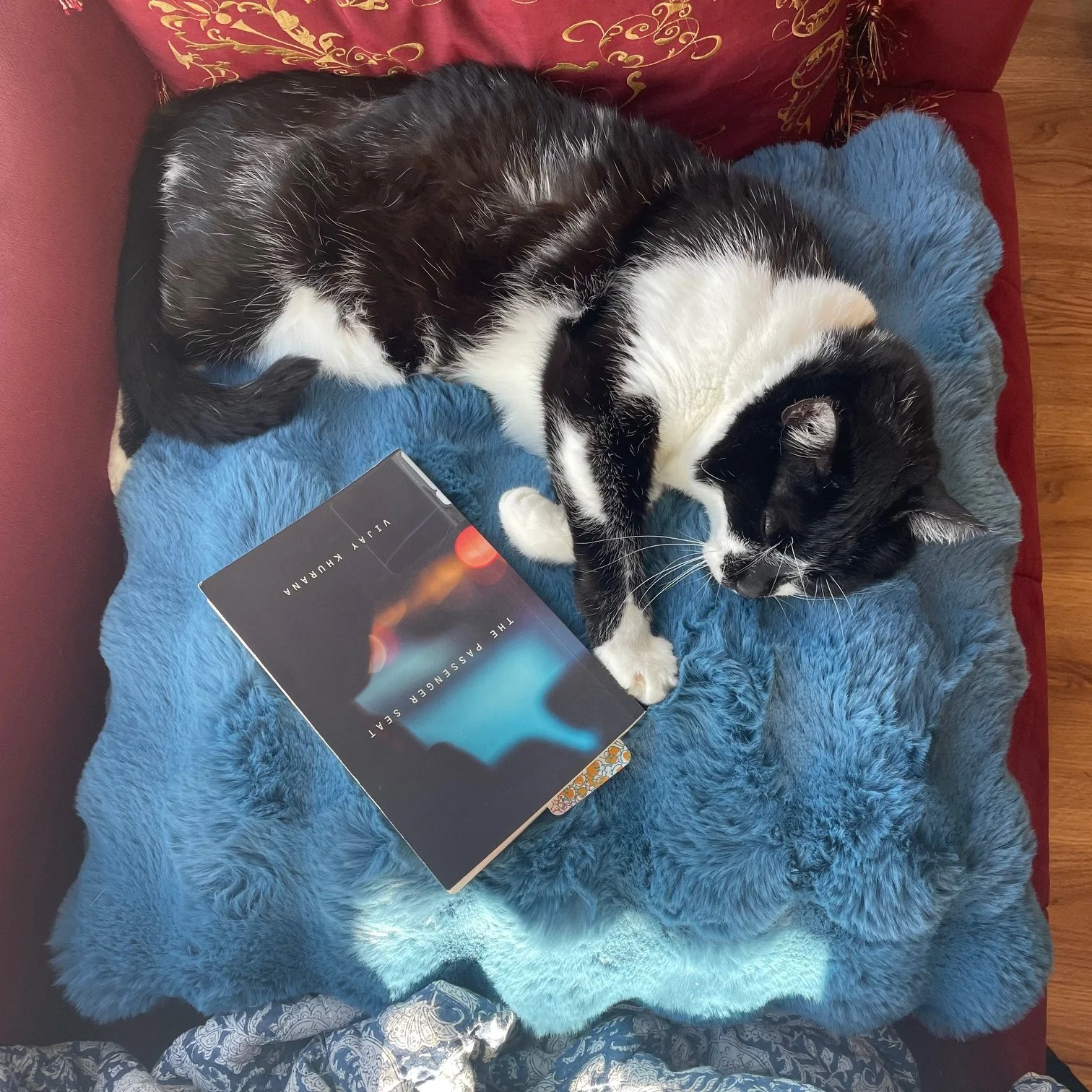
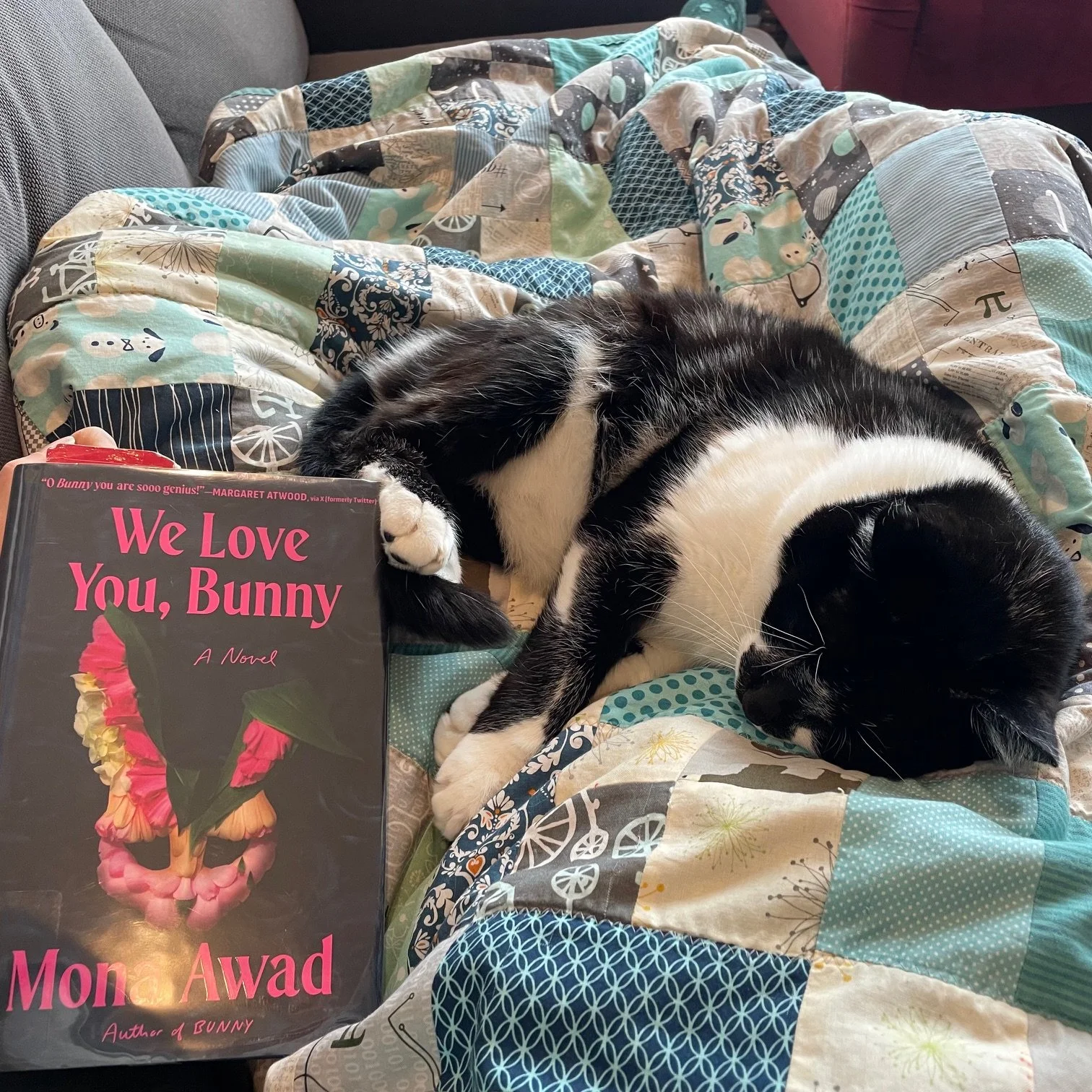
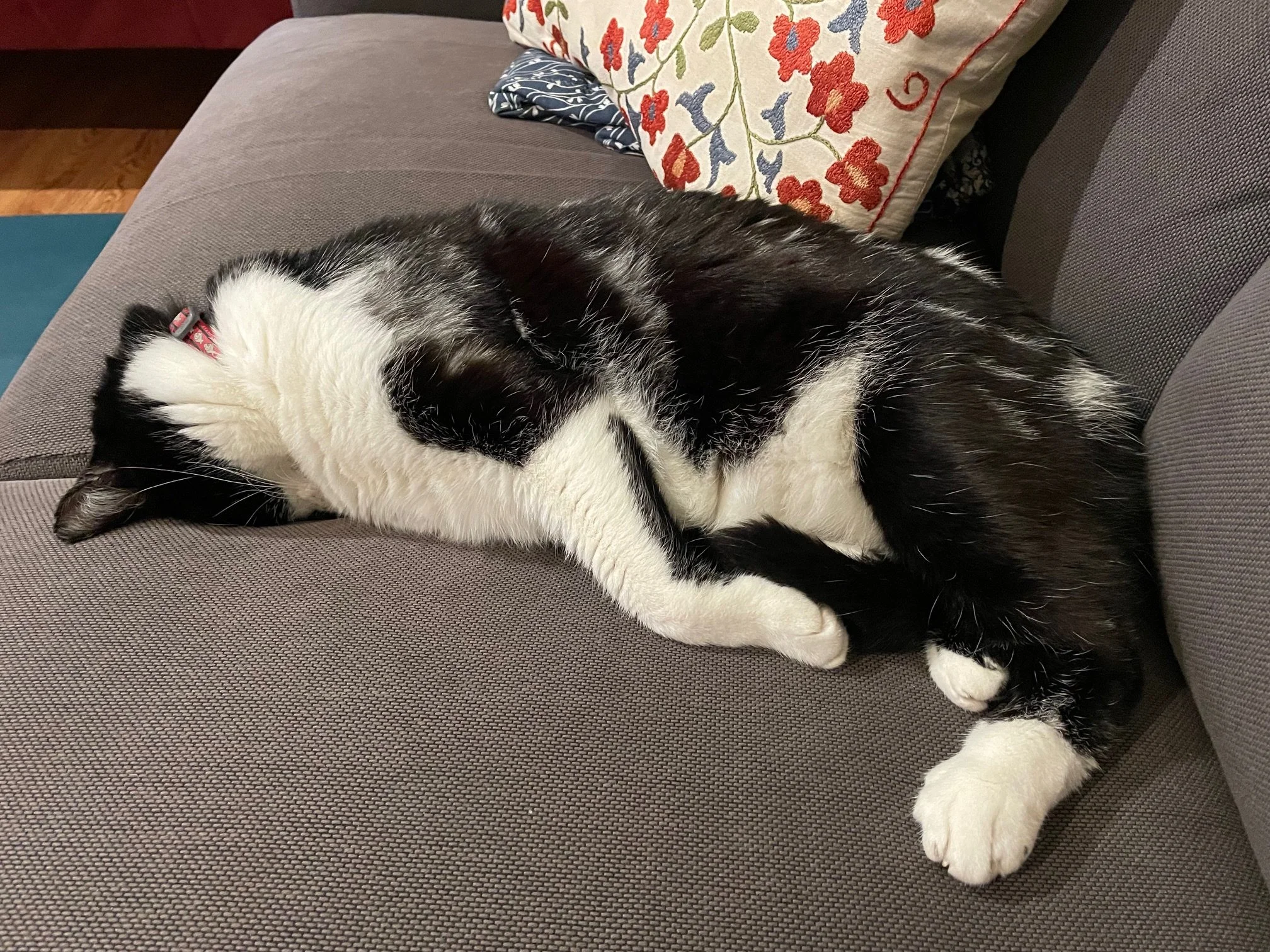
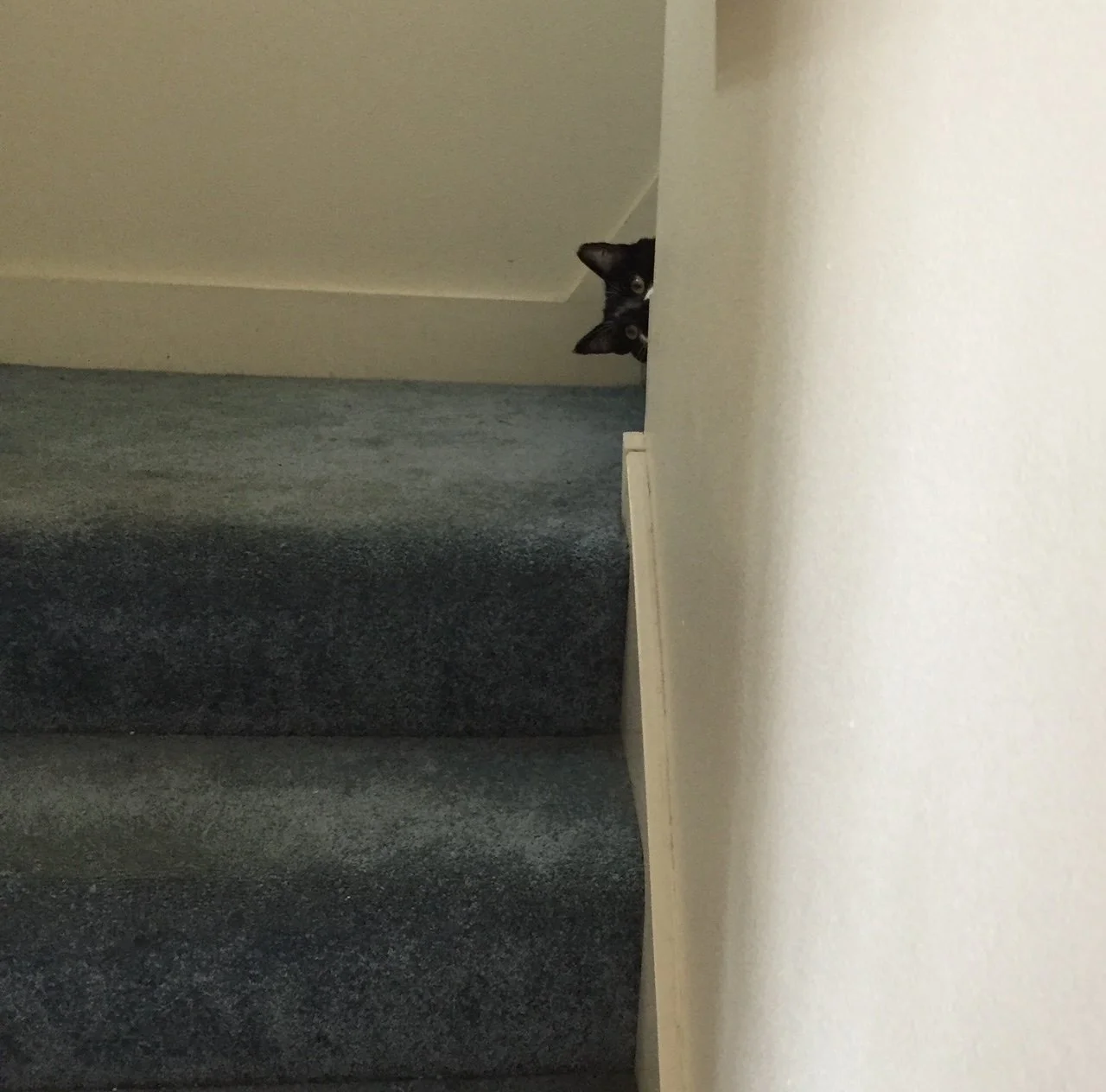
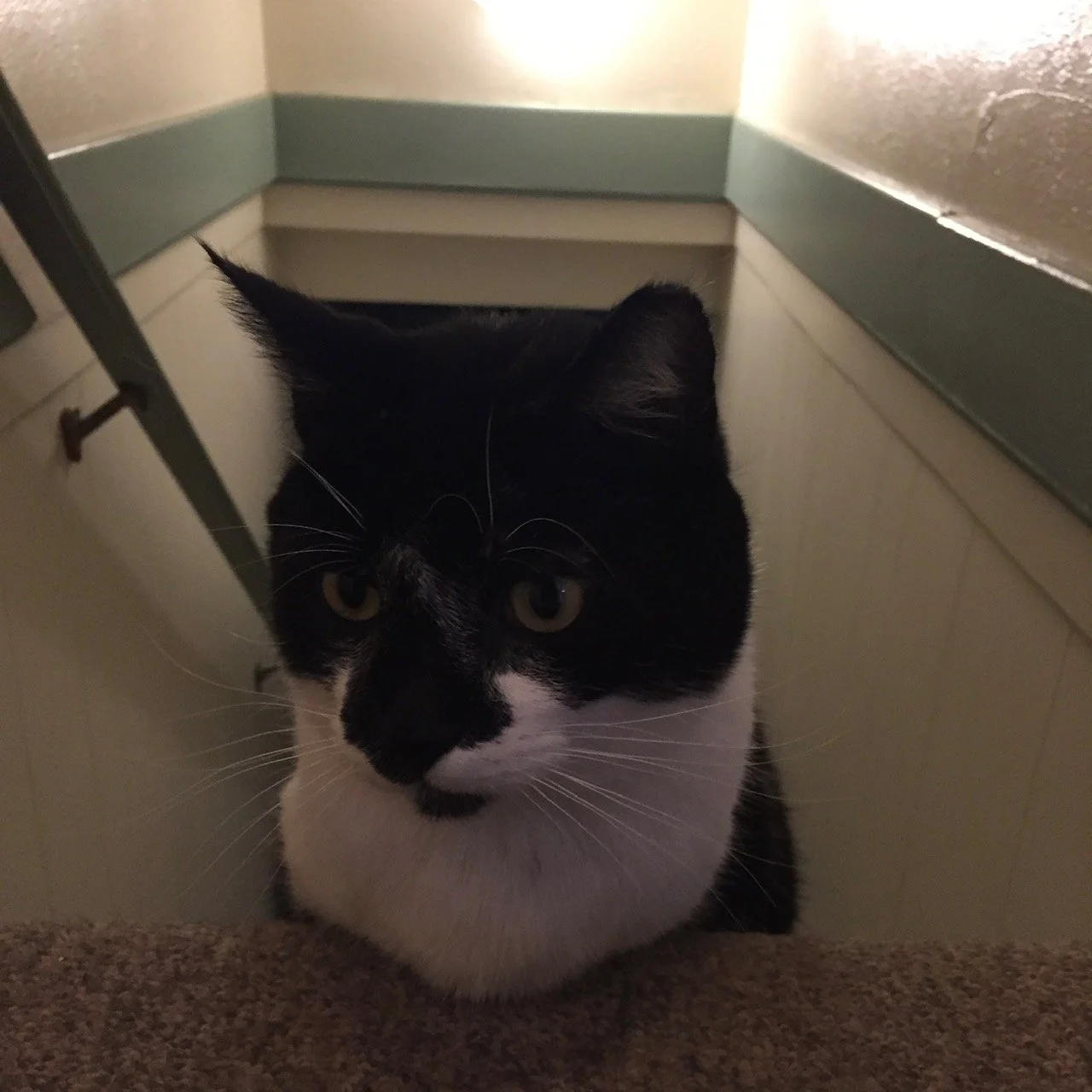
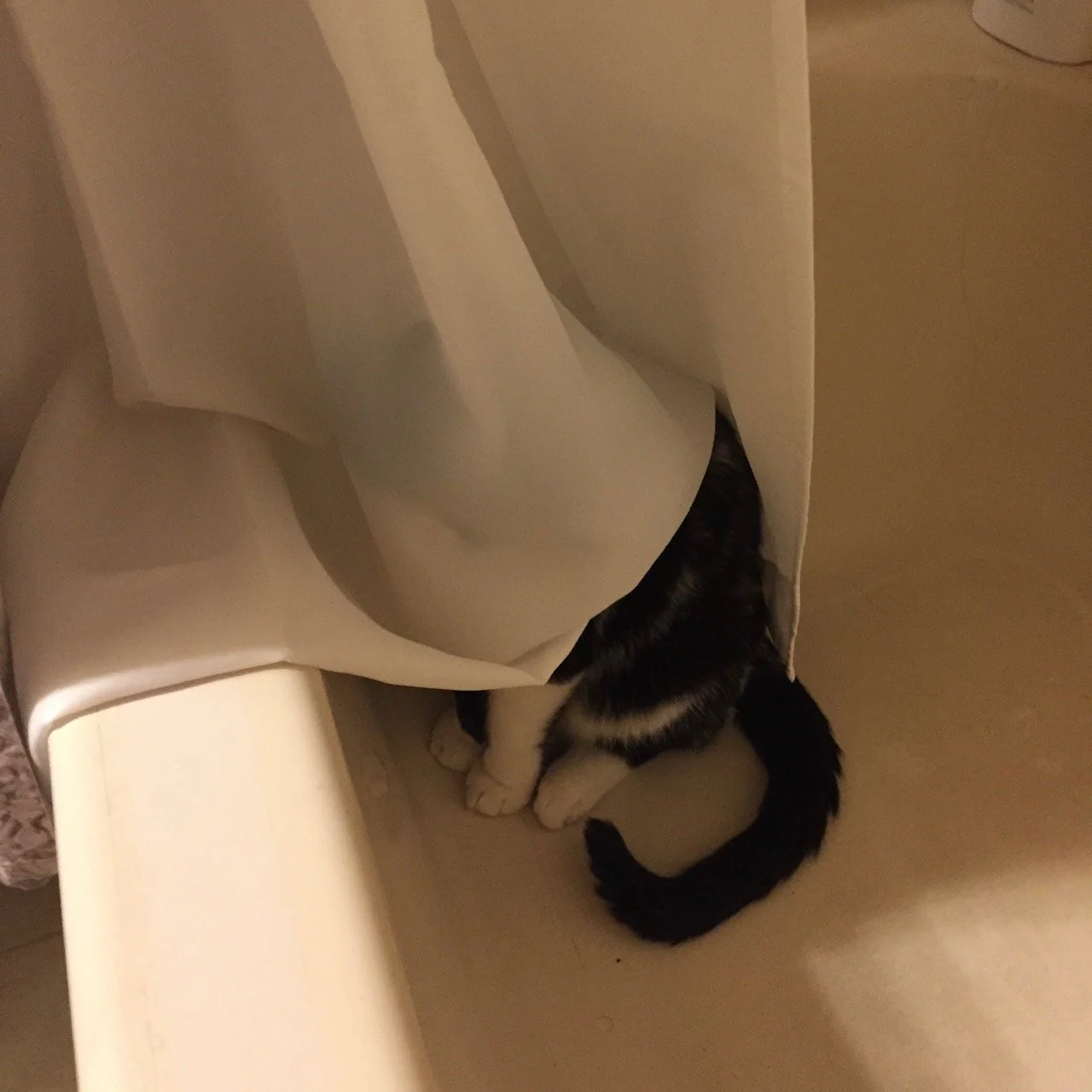
Nominated by Bretnie, Vinny is a bit of a trickster, playful and curious to the point of making his owners crazy. Just when you think he might actually be evil, he turns on the charm with his goofiness and aggressive snuggling.
Vinny loves getting cozy on the couch with a good book after an active morning getting into trouble. His favorites novels are quirky, feisty, yet a little sweet, just like him: The Sisters Brothers, My Sister, the Serial Killer, and Mary Toft; or, The Rabbit Queen. This year he's rooting for We Love You, Bunny, because he can relate to a misunderstood murderous bunny-man.
If you’re interested in nominating a pet as a mascot for this year’s Tournament of Books, contact us for more details. (Please note, this is a paid program.)