
Flesh v. Blob
presented by

MARCH 17, 2026 • OPENING ROUND
Flesh
v. Blob
Judged by Sam Macon
Sam Macon is a filmmaker, writer, and photographer from Milwaukee, Wis., but he now lives in Los Angeles, Calif., for better or worse. Mostly better. He is the co-director of the documentary film Sign Painters and co-author of the companion book published by Princeton Architectural Press. In addition to directing countless commercials, music videos, and short films, he makes bootleg hats with book titles on them and tries to get better at tennis while raising a family. Known connections to this year’s contenders: None. / sammacon.com, Instagram
After another year marred by natural disasters, neverending wars and their associated crimes, a government run by scammers, grifters and murderers, massive corporate media mergers destined to influence how we take in all this bad news, I can’t help but wonder, where does literary fiction fit in? When our response to all this is to collectively curl our backs over our glowing screens and scroll through torrents of tragedy, hot takes, jiggling bodies, and AI slop videos of nonexistent heroic dogs saving children from nonexistent bridge collapses, can the simple act of putting down the phone and picking up a book make a difference? Can The Novel save us from ourselves?
Then my phone buzzes. I reach for it, pausing to wonder... Is any of what I just wrote actually true or just bourgeois fantasy?
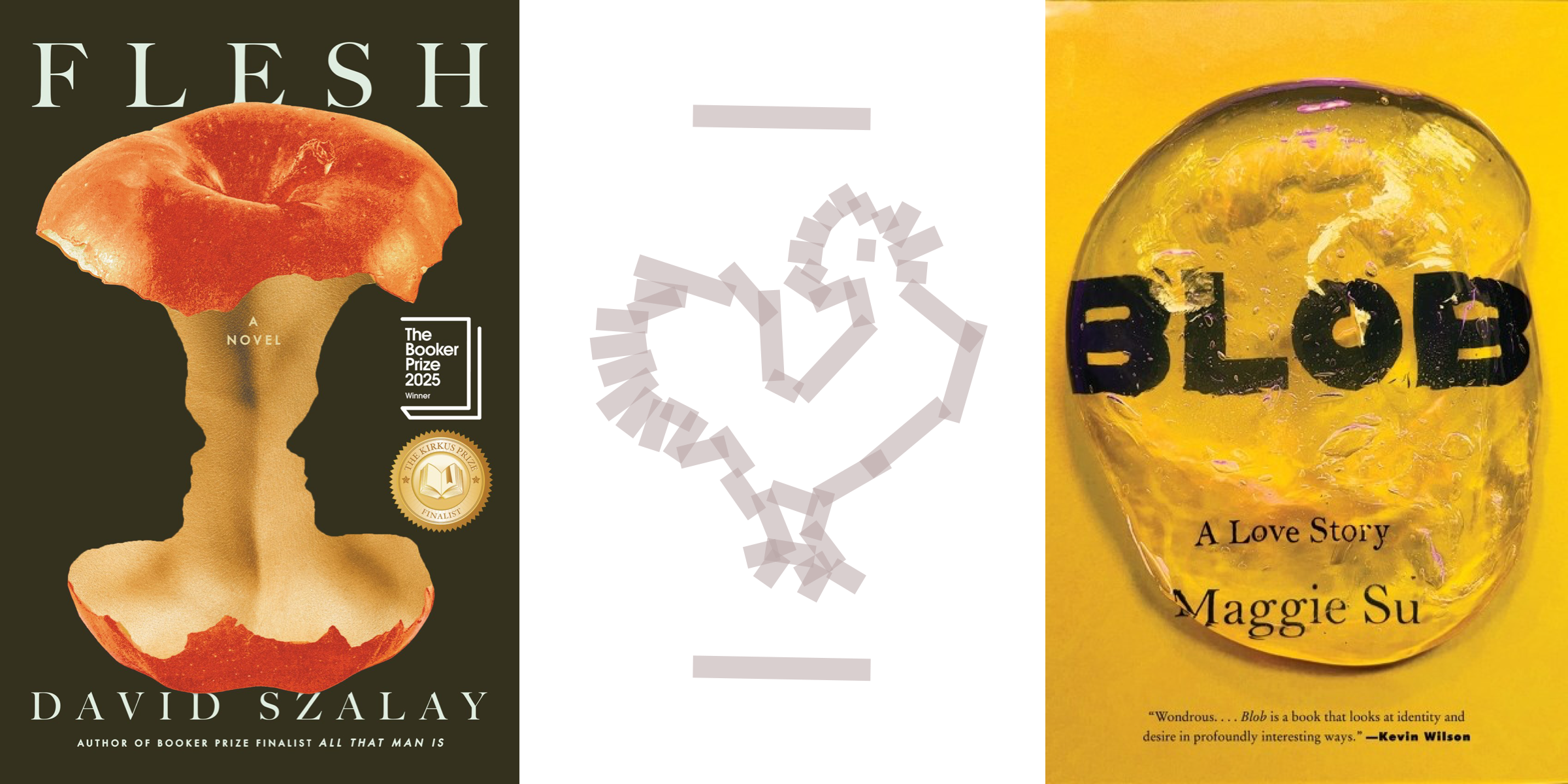
This, my friends, is the baggage I bring to the Tournament of Books and my reading of Flesh, David Szalay’s Booker Prize winner, and Maggie Su’s debut, Blob: A Love Story—a pair of books that couldn’t be more different formally while both interrogating the same central concerns: what it feels like to be alive now; can any sense be made of this chaos; and maybe most importantly, how the hell do you avoid dying alone and ideally find some morsels of happiness and purpose before you shuffle (or get pushed) off this mortal coil.
Flesh is the simultaneously sparse and expansive rags-to-riches story of István, a Hungarian-born, taciturn man who finds, loses, finds, and loses himself on both sides of the millennium. While the story is often told with the icy remove of a surveillance camera one might find in the hallways of the housing block where we first meet young István living with his mother, or as part of the panopticon monitoring the tony parts of London where he improbably finds himself living a life of luxury as an adult, the novel’s approach is startlingly effective. This lean writing style mirrors the cipher-esque quality of the protagonist and is of a piece with István’s (at times frustratingly) monosyllabic dialogue. This is not to say that Flesh is a book without literary flourishes; it’s filled with a type of cool but calculated prose that sneaks up on you and really hits. “He sits up and places his long feet on the Yorkstone. The gray-greenish water sways in the pool, trying and failing to reflect the proper forms of things. For a second he feels dizzy.”
FROM OUR SPONSOR

While there’s been plenty of talk about Flesh being “a book about maleness” (and it does nudge one to contemplate the emotionally constipated, fundamentally unknowable nature of modern masculinity), I was far more interested in the specificity of István’s story and his quixotic life. For a guy who likes to reply to questions most often with a single word, my man ends up going on quite a ride.
More than ideas about maleness, I found myself wrestling with the stripped-down writing style itself. Effective as it is for István’s story, it certainly seems to be de rigueur for new literary hits of recent years. Is "spare" or "sparse" the new "performatively turgid?" While I don’t need every writer aping early Franzen (but citing Gaddis) to punish us with 600-pages-plus doorstoppers, I can’t shake the feeling that as writers “strip things down,” we readers might be missing out. Would a “bigger” version of this story be… better? Hard to say, because that version doesn’t exist, so it’s essential we meet the book where it’s at and for what it is.
What’s most fascinating about Flesh, formally, is how many of István’s central life events happen off-camera, as it were. The first chapter ends with István heading to war in Iraq, and the next picks up after he’s returned. Not giving us a single explosion could, for some, be seen as a narrative cop-out. Though plenty of action does happen on the page, Szalay’s technique of omission urges us to consider how much of life really unfolds in the aftermath of Big Events. In other words, Flesh seems less interested in the boat sinking and more concerned with what we do in the wake, flailing amongst the flotsam.
It’s especially interesting to consider all of this in relation to Blob, a book that uses its slim page count to tell us everything that Vi—our often unwashed, unabashedly rude protagonist—is thinking, doing, and feeling in real time, as well as in recurring flashbacks. Compared with Flesh and its minimalist approach, is total disclosure of every thought, every memory, and every witty observation the way to truth?
The novel follows Vi, a half-Taiwanese, half-white twentysomething, as she navigates her post-breakup, shitty-garden-apartment-dwelling, meaningless-hotel-desk-clerk-job-having, college-dropout existence. The world is stupid and people are annoying—except for her loving, if sometimes misguided, parents, who are sometimes also annoying. For Vi, love is not just hard to find. It’s impossible. That is, until she finds the titular blob behind a dive bar, whom she takes home and wills into a beautiful male form she names Bob, for better or worse.
The genre elements of Blob are fun (though things don’t get as phantasmagorical as this sicko would have liked). The central hook—a cereal-and-cold-hot-dogs-eating blob, raised on TV and magazine tears of peak Clooney and Brad photos, who ultimately becomes a real-life boy—is compelling. I was eager to see how far Su would take things with blob-turned-Bob’s new life. And while the plot fully commits to this surreal conceit, the book is really about Vi and her many observations on everything from jealousy and loneliness to interior decorating, food (both delicious and disgusting), booze, her annoyingly put-together frenemy coworker, the feeling of wet underwear, dry underwear with the days of the week written on them being worn on the wrong days, etc. It’s entertaining and often relatable, but it’s also a lot. Despite the deluge of “information” that comes our way via Vi, I found myself wanting… something. Something more, something surprising, something… new.
Blob (the book, not the man) is at its best when it leans into the specificity of Vi’s cultural dysphoria, which seems symptomatic of both her Taiwanese-American identity and also her being alive now in this mediated reality that’s making everyone insane. And who can argue? The many lovely passages about Vi’s dealings with her parents—like this one about a gnome statue Vi gave her mother—were highlights for me:
I gave the statue to her unwrapped, in the kitchen of the old house, the room I used to call hers because it was always full of her cooking and sad country songs. She’d just taken the dishes out of the dishwasher and her glasses were fogged. She cleaned them on a dish towel before taking up the gnome, examining him like a precious stone, a smile spreading across her face.
“A good choice,” she said then.
The only problem is that such moments of quiet emotional insight, specific to Vi, a character I had a lot of affection for, are lacking in Blob. What we get instead is a plot I often felt ahead of, punctuated by Su’s ruminations on everything being shitty—something we’re all unfortunately familiar with, and, for me, didn’t go far enough or cut deep enough to feel urgent. Conversely, Flesh, with its beguiling mix of authorial remove and subtle emotional devastation, kept me rapt even when things seemed like they might work out for old István.
Despite their differences, both novels had me thinking about the relationship between doom and grace. Total collapse and glimmers of hope in this modern life. Flesh suggests possible disaster or bliss lurking around every corner, with every chance run-in. It drilled down on the fundamental truth that a life is just a string of one event, one choice, one moment after another, and the potential for falling or failing is both high and nigh. Whereas Blob—the one with an actual creature on the couch—didn’t seem inclined to imply that things may truly go south, even as Su ruminates on everything being mostly bad. So, while both novels kept me from looking at my glowing screens—for which I am always grateful—I was only seduced by the book that was willing to say that actual disaster isn’t just something we watch on our phones, but is in the house, always on the table, ready to pounce and tear down everything we’ve built.
Flesh it is.
Advancing:
Flesh
Match Commentary
with Meave Gallagher and Alana Mohamed
Alana Mohamed: I appreciated Judge Macon’s thought process here. On paper, I like Blob more than Flesh, but I also felt myself wanting something more from Blob. And I did find Flesh quite readable for everything that happens, though I ping-ponged between feeling sad then annoyed, then bored by István.
Meave Gallagher: Girl. István drove me bananas. Take his totally inappropriate sexual relationship with his neighbor—which, if you can’t see that, pretend the older person is a man and the younger person is a girl. I didn’t feel like Flesh fully acknowledged István’s having been groomed by an adult into a sexual relationship as a young adolescent. I felt terrible for him, and angry. Flesh doesn’t seem to consider consent regarding young István, whereas this becomes a huge issue between Su’s Vi and Bob; something I really liked about Blob.
I agree with Judge Macon’s observation that Flesh has higher stakes. And while it had more deaths and consequences from them, it made them so boring, Alana! I wanted to die and take István with me, this man who came from abuse and near-poverty, who served time in a youth prison and was part of the coalition of the willing, and then as soon as he married a fancy lady with money who gave him a son, started taking all of his good fortune for granted. He and Vi are both self-sabotaging jerks, and by the end, I was hopeful for Vi, but I was so sick of István. Go ahead, efface yourself into nothingness, it’s OK.
Alana: LOL at “I wanted to die and take István with me.” He probably would have just said, “Yeah, OK,” if you suggested it to him. I liked seeing István’s life unfold—there was something tragic to his listlessness that made me feel the novel wasn’t endorsing it per se. And I think the consequences of the assault are there, even if István doesn’t process them. Blob seems to promise more and underdeliver. Does Vi really take any action by the end? It feels like she kind of happens upon a boy, happens to make a decision, and that Bob isn’t used as well as he could have been. Flesh felt more complete to me.
Meave: I don’t think Blob is necessarily a better book, but it was a more appealing book? Frankly, I was uncomfortable with Flesh because I didn’t trust István not to sexually assault someone. To his credit, he never did! But for me it was a dark cloud hanging over the whole story. I guess I preferred the way Vi navigated her journey from treating Bob as a sex toy to making amends for her terrible behavior. But I appreciated seeing a story with sexual violation that includes the wrongdoer making a genuine apology.
Alana: Personally, I think Bob should have pushed Vi off that roof. Her self-pity was cranked up to 100 for someone who was relatively OK, all things considered. I guess that’s part of the argument for Flesh. They’re both aimless characters, but we’re not subject to István’s inner monologue and Flesh doesn’t promise any redemptions or revelations. I do think elements of István crossing sexual boundaries are hinted at, but it all feels underexplored in a novel about maleness. Both novels are avoidant in some ways, but I think Blob was too easy on Vi. At least Flesh put István through the ringer, and acknowledges that “actual disaster [is]…ready to pounce and tear down everything we’ve built.”
Meave: Yeah, that idea gave me a big pause, and not just because I’ve been so involved with providing material aid to families in Gaza for the past two years. Our government has its own Geheime Staatspolizei who are stalking and arresting protesters via facial recognition software and social media! People are being black-bagged and sent to concentration camps where they are physically, sexually, and psychologically abused! And—at time of writing—the most outrage the opposition party expresses after visiting one of those camps and witnessing “60 men packed into a room shoulder-to-shoulder, 24-hours-a-day, with a single toilet in the room and no shower facilities” is that the room for “dangerous criminals and violent offenders” is empty?! Guantánamo is still open!
At time of writing, we’re illegally holding the president of a sovereign nation and his spouse on baseless charges after abducting them from the state presidential residence! We’re threatening war on any country who interferes with our redoubled blockade of Cuba! We’ve sanctioned the UN Special Rapporteur for Occupied Palestine! We’ve sent two big-ass warships to the straits of Hormuz while our sanctions on Iran continue to kill people through starvation, lack of access to medicine and medical treatment, difficulty traveling and banking—it’s obscene. And yes, so much of this we have to witness on our phones, because we can’t be in Cuba or Iran or Venezuela or Palestine. But we can use our phones to organize protests against our government’s actions, and plan IRL meetings with our friends and neighbors to organize support groups. Make them into tools of resistance instead of mediators of disaster.
Or: Doesn’t the concept of “the first livestreamed genocide” imply a mainstreamed understanding of the true history of Palestine among the broader population? If that’s not an argument for “seeing a disaster on phone can lead to acting against the disaster in real life,” I can’t think of a better one. Wait, I can: the George Floyd uprisings. The ongoing—as of this writing—anti-ICE protests in Minneapolis-St. Paul and Chicago and Los Angeles. Et cetera ad infinitum.
Alana: I take your point, Meave! I do wish that we would do away with this phone versus IRL division—if you’re seeing something awful happen on your phone, it is happening to you and it’s your responsibility to do something. But I understand our judge’s conclusion in response to how these two books treat disaster, and I do think Flesh is the novel that is most aware of these things. Like, István participates in the Invasion of Iraq! Awareness of disaster added layers to Flesh, whereas Vi’s life seemed to be living outside of these things.
Meave: That’s a fair point. And I did appreciate Judge Macon’s observation that so much of István’s life happens off-page, which gives it a distancing effect that I’m ambivalent on. More meaningful events? Yes. More time with István? Ugh. Maybe I like the idea of Blob more than the reality, but Flesh left me cold. I find it impossible to write about these books without lapsing into wretched puns. Any final thoughts?
Alana: Honestly if I were smarter I would be making puns about Blob and Flesh. I suppose it’s notable that for all the single-noun titles, we started with a description of what it’s like to doomscroll. Maybe one day we’ll get to read a book called Case about a wayward phone watching its owner develop depression and anxiety.
Meave: LMAO ALANA. Next up: the final match of the opening round, where Judge Lilliam Rivera presides over two domestic family dramas, The Ten Year Affair and If You Love It, Let It Kill You. We are definitely qualified to comment on economically stable people in LTRs with children!
Today’s mascot
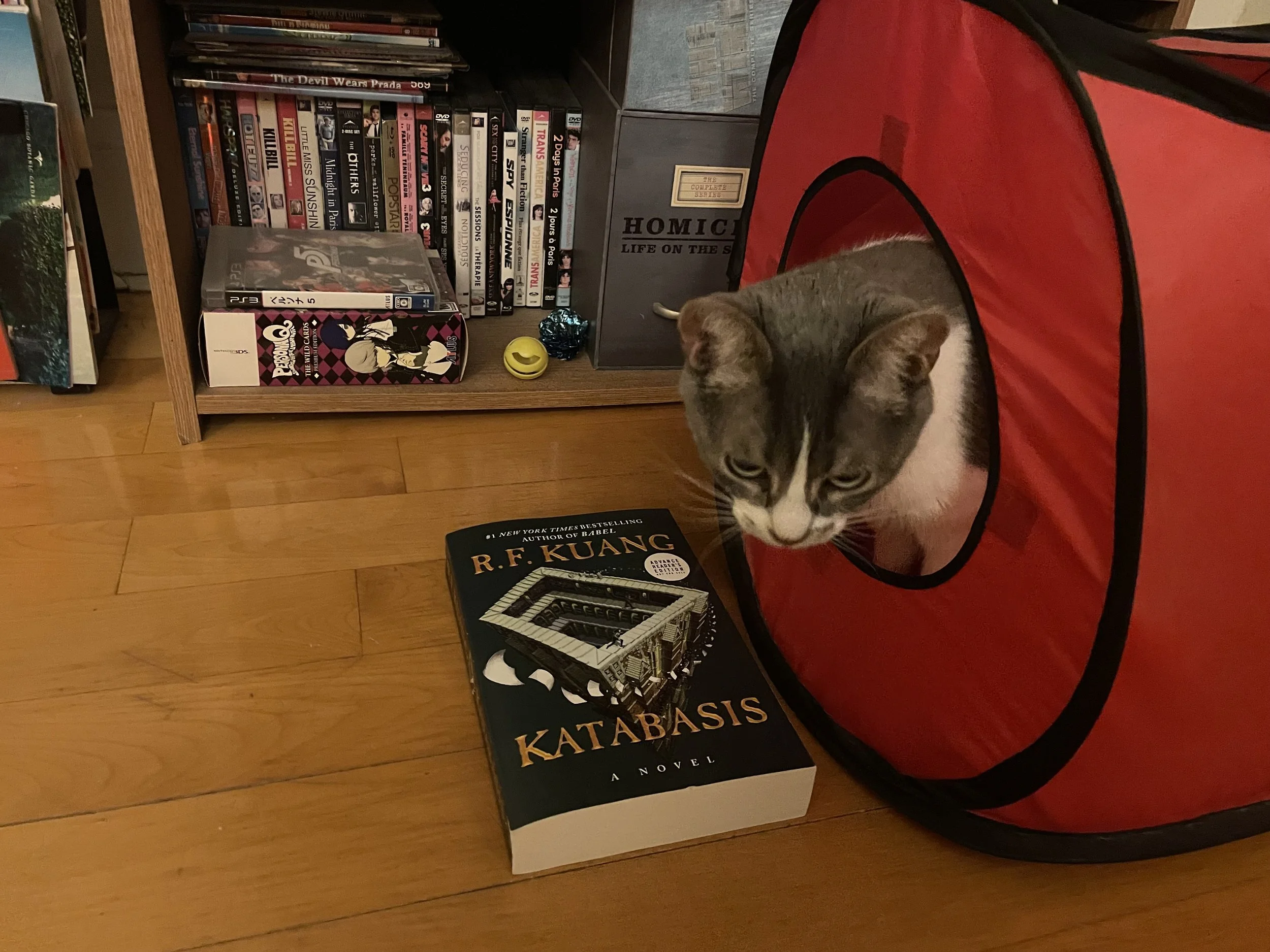
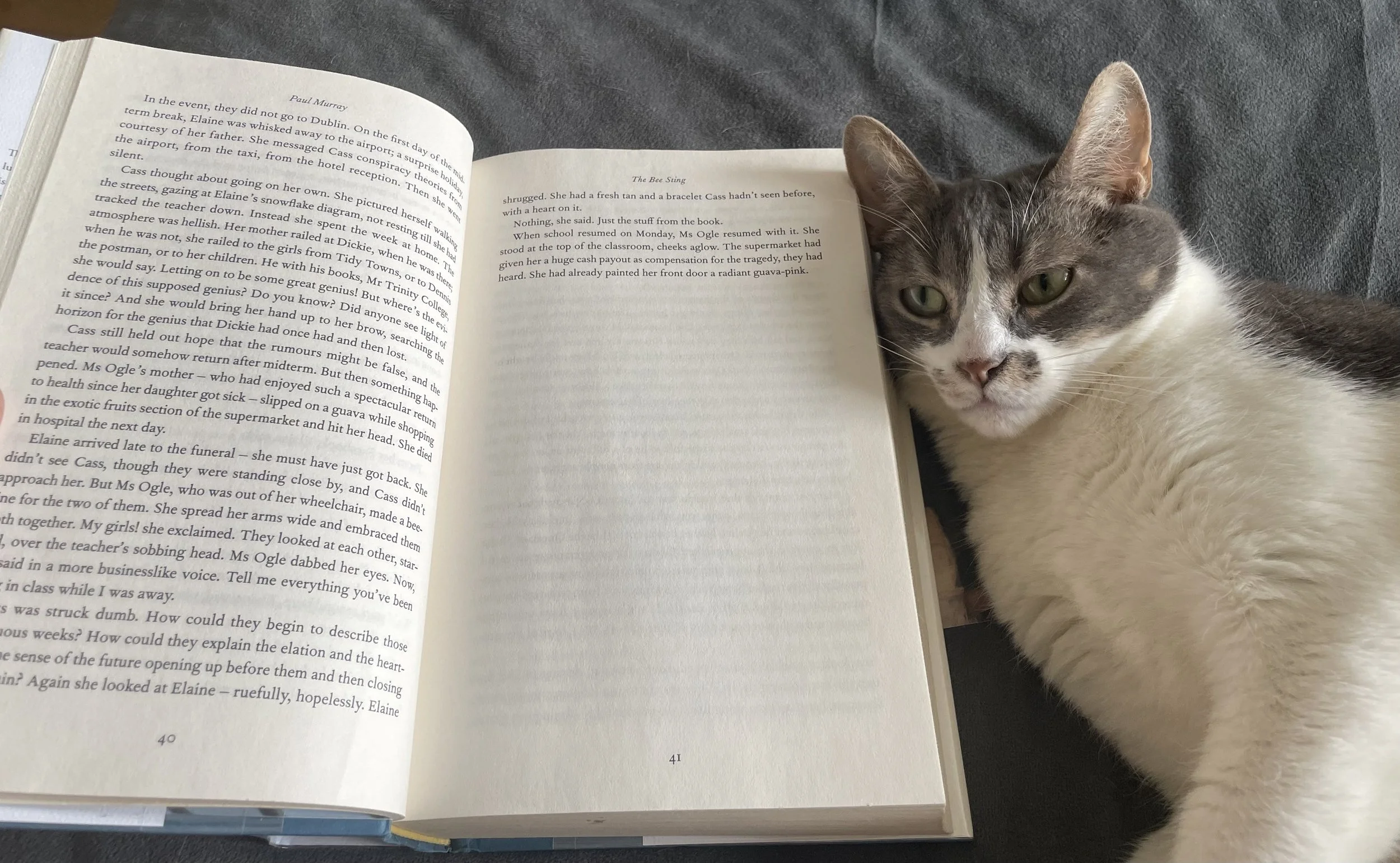
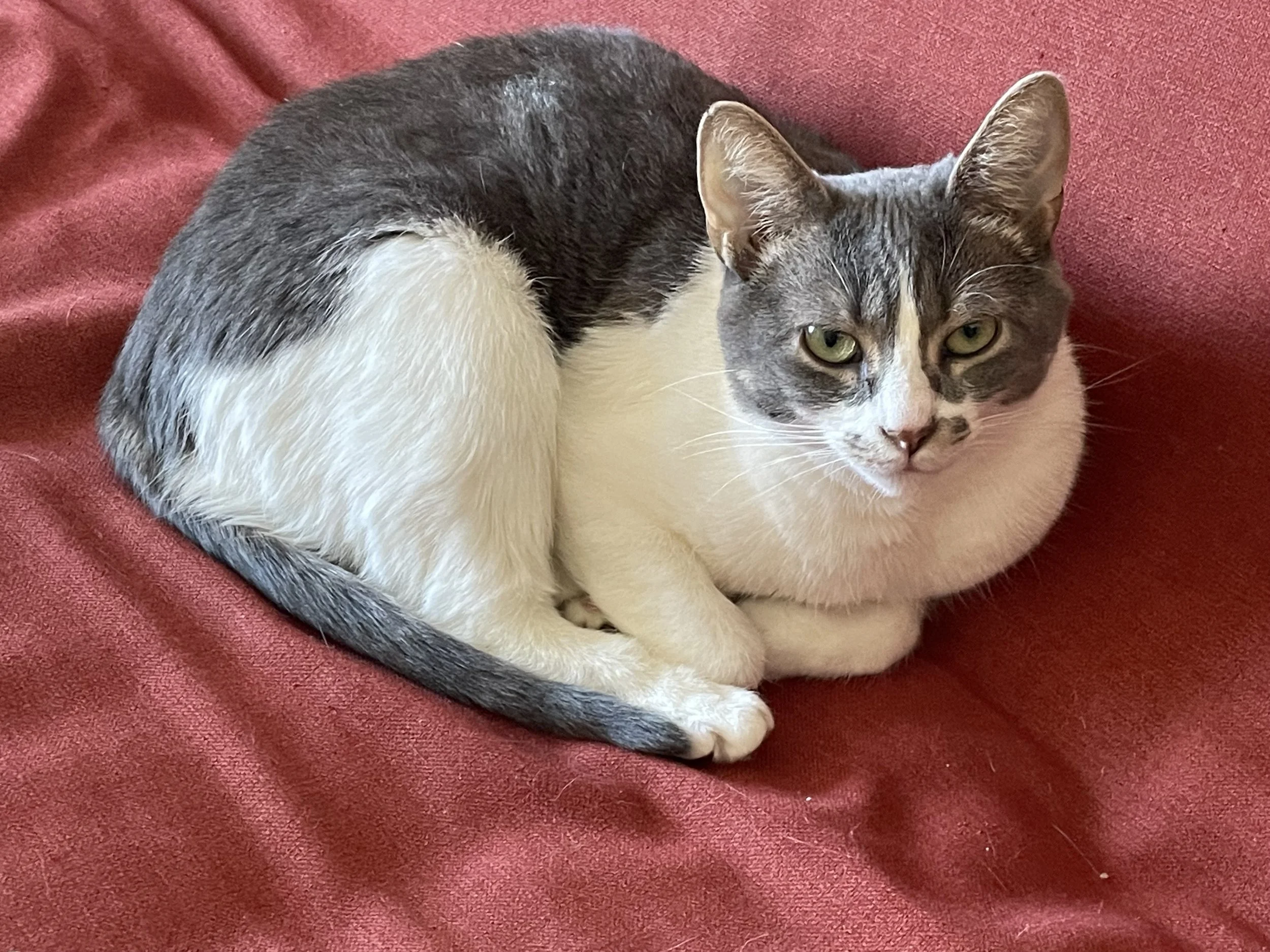
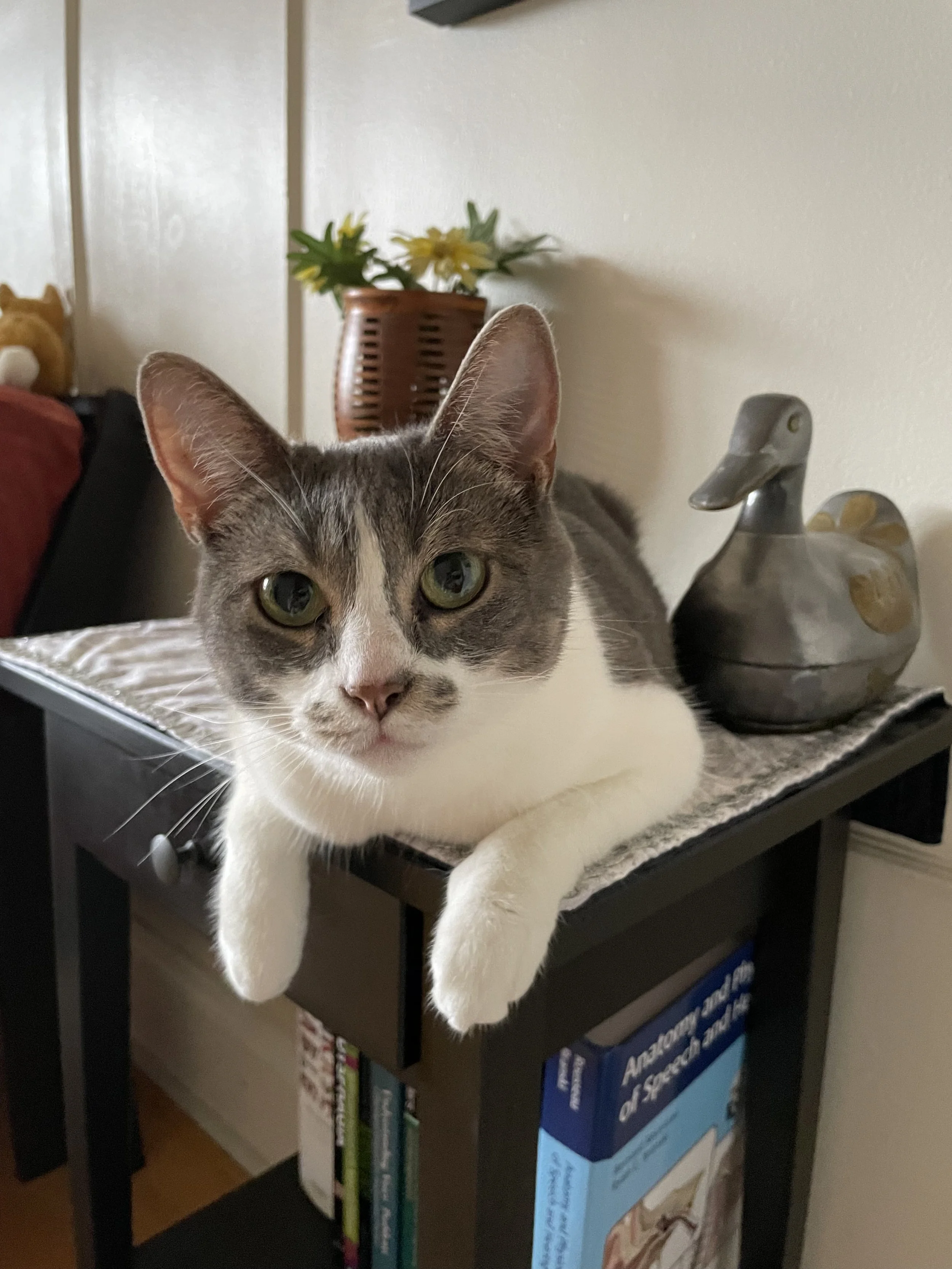
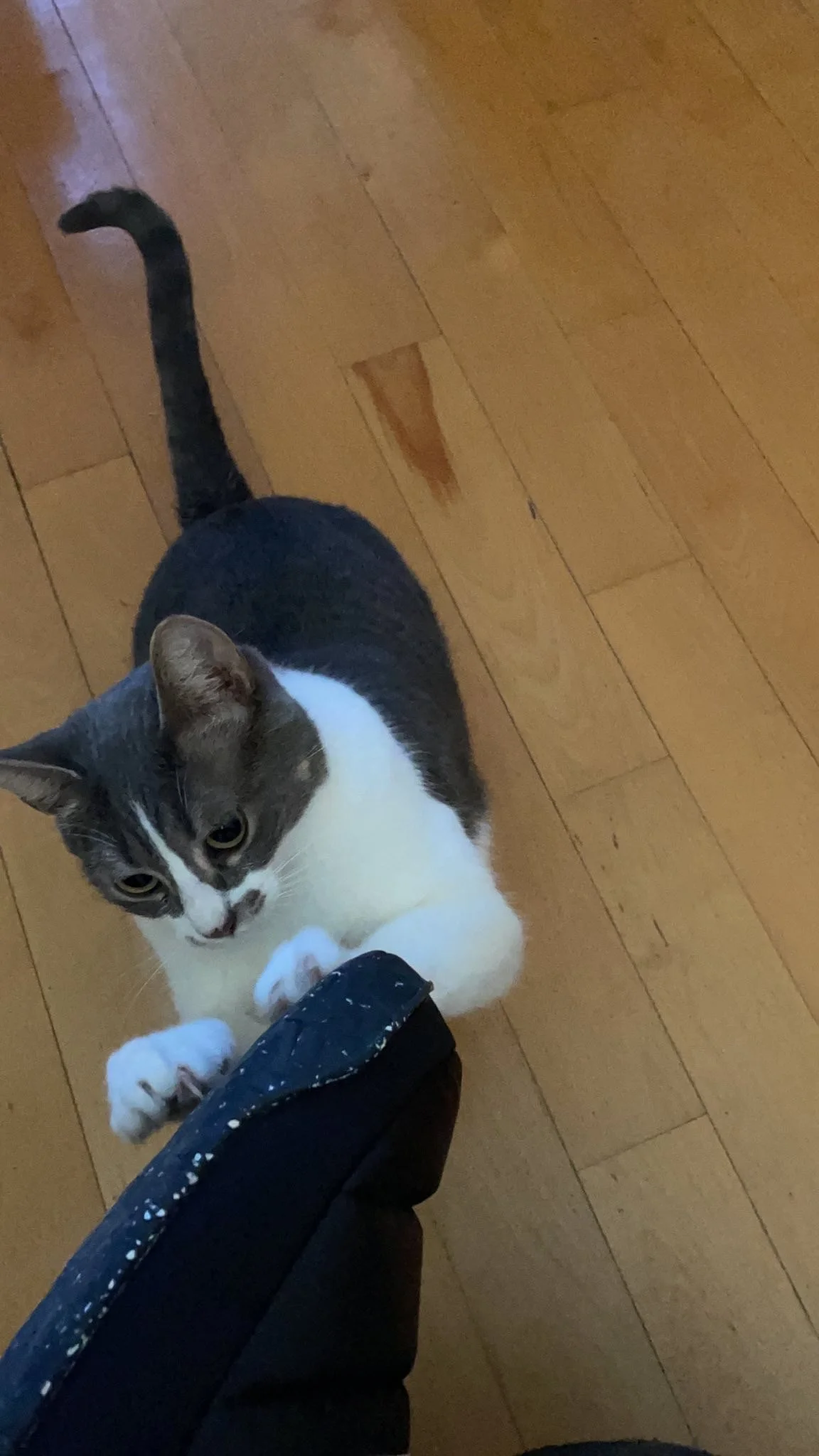
Nominated by Moti, Wasabi is a tiny cat café alumna who contains a much larger cat’s helping of sass. Like her namesake, her spice is fast and hot, but once she’s expressed herself, she’s quick to forgive and forget. Her favorite activities are eating, chasing treats and toys, and very aggressively snuggling. Despite her size, she likes reading big literary fiction books; she enjoyed The Bee Sting. This year, she is rooting for Katabasis, ever since she misheard the Cat in the title.
If you’re interested in nominating a pet as a mascot for this year’s Tournament of Books, contact us for more details. (Please note, this is a paid program.)