
Katabasis v. The Catch
presented by

MARCH 23, 2026 • QUARTERFINALS
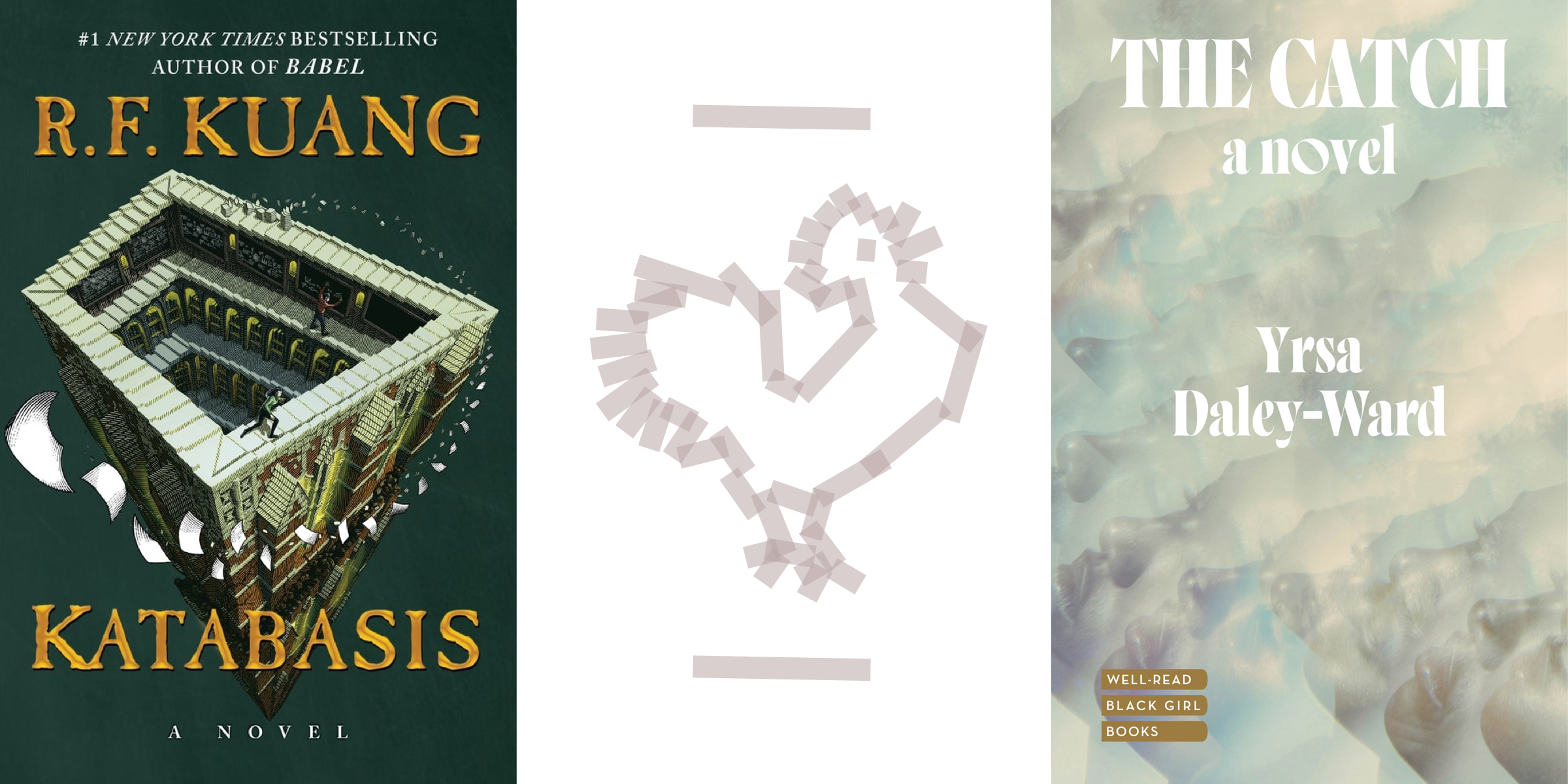
Katabasis
v. The Catch
Judged by Cassandra Lane
Cassandra Lane is winner of the 2020 Louise Meriwether First Book Prize and author of We Are Bridges, an NPR Books pick. Her stories have appeared in the New York Times’s “Conception” series, the Los Angeles Times, MSNBC, LitHub, the Millions, the Atlanta Journal-Constitution and various anthologies, including Writing the Golden State: The New Literary Terrain of California. A Louisiana native and former newspaper reporter, she is currently editor in chief of L.A. Parent magazine and lives in Los Angeles with her family. Known connections to this year’s contenders: None. / cassandralane.net, Instagram
In 2025, the year my father died and my mother began showing marked signs of memory loss, I realized how impossible it is to separate our ambitions from our insatiable need for parental approval—and how much this pipeline of need is a two-way river.
After my father’s funeral, I came across a DM he had sent four years earlier, asking me to help him assemble his poems into a book. It was around the same moment my own book was entering the world. There I was, finally witnessing an old dream materialize, while the father whose love and support I’d longed for all my life begged me to help him pull his ambitions from the clouds and shape them into something real, something praiseworthy. Reading his words posthumously, I felt both resentment and an overwhelming desire to fulfill his wish.
I was in the early throes of sketching out this father project when I read two novels—Katabasis by R.F. Kuang and The Catch by Yrsa Daley-Ward—that circle themes of ambition, the seeking of adoration and approval from authority figures (a parent, mentor, and even gods), the dissolution of boundaries between life and death, and how our idols are mere humans after all.
FROM OUR SPONSOR

True to its name, Katabasis is a heroine’s journey into the underworld. Our protagonist, Cambridge post-grad analytical magick student Alice Law, and her “advisee sibling” Peter Murdoch, cross the portal into hell to retrieve their academic advisor, Professor Grimes, whom Alice had mistakenly killed during an occult experiment gone awry. Alice and Grimes were not on the best of terms at the time of his gory death, but Alice, rife with guilt and ambition, believes she must bring him back—especially if she is to attain the kind of academic career she envisions.
Despite his cruelty, Grimes’s peers and students consider him one of the most ingenious magicians in the world. And Alice will not settle for working with anyone less than the best. There are grants and fellowships to be awarded, great jobs to land, and Grimes is the ladder to these opportunities.
Upon retrieving him, Alice hopes for a return into his good graces, where he will once again lavish her with praises and connections, a hunger that has previously placed her at odds with herself—“She had no idea what she wanted from their union. She wanted Professor Grimes to devour her. She wanted to be that hunk of flesh in Saturn's hands. She wanted to become him. She didn't know which.”—and at odds with her colleague Peter, who was born to brilliant, well-connected parents, easily excels, and is one of the academy’s golden children.
Driven by his own motives, Peter insists on joining Alice on her journey. Envy, resentment, and mutual respect simmer beneath their interactions, yet once in the land of the dead, they quickly realize they need to band together. They encounter all manner of shifting realities, shades, beasts, and tests from the deities. Outside the opening and some flashbacks, the bulk of the book (540 pages!) takes place in Kuang’s meticulously imagined hell, a grotesque and sometimes beautiful reflection of the living world. “Hell is a campus,” Peter surmises. Souls linger in libraries, argue over dissertation drafts, rehearse resentments, and repeat their failures. The irony made me spit out a laugh, then twist my lips in disdain as I thought of some of my own experiences in grad school, as well as my dear professor friends who live with this angst daily, and my own son, who just began his college journey and is already fighting against comparison and imposter syndrome.
In one of the short chapters that strays from the close-third-person narrator and instead is written in a contemplative voice that sounds like a mix between a wise old crone and an academic schooled in ancient, global religions and philosophies, we are told:
Living and dying are two sides of the same coin. It makes more sense to conceptualize souls as continuously flowing from one world to another than to think everything that ever lived is forever accruing in an underworld tomb.
The Catch captures the other side of that coin, a kind of inverse of Katabasis. While Kuang’s story sends its protagonist downward, The Catch summons the dead upward—at least it appears to, if one of the protagonists, Clara Marina Kallis, is to be believed. The novel is told in alternating points of view: through the eyes of Clara and of her twin sister Dempsey Nichelle Elizabeth Campbell. The sisters, born on June 25, 1995, in the zodiacal sign of the mother, are motherless. Their mother, an aspiring novelist, abandoned them when they were infants. The girls, who were adopted by different families, were told their mother likely died in the River Thames, but when they are 30, Clara spots a woman, Serene Marine Nkem Droste, who looks just like the picture of their mother. Except this is impossible, right? Their mother is dead… and this woman is the twins’ age: 30.
Clara—a commercially successful novelist whose book “echoes” the unpublished manuscript their mother once wrote—develops a relationship with the woman who may or may not be their mother. “Perhaps I summoned the dead woman from the water?” Clara asks herself. “Perhaps there's a spell, a blue trick that happened somewhere between wishing for a thing with everything you've got, and the dream coming to life as the clock strikes twelve.”
Dempsey, who envies her sister’s beauty and fame, thinks Clara is experiencing a mental breakdown. That is until she, too, becomes fascinated by Serene’s haunting resemblance and entranced by her charms.
If slipping into the unconscious is a psychological trip to the underworld, the twins’ approaches (like their personalities) differ drastically: Clara escapes into substances while Dempsey explores meditation and other spiritual practices that sometimes leave her more confused than healed.
Like Alice and Peter, Clara and Dempsey project their longings—for ambition, for love—onto authority figures and become lost without them. Disappointed and disillusioned, their journeys lead them to the revelation Alice eventually has: “You thought people were giants, and they devastated you by being so human.” And their journeys lead them to each other. If you can’t rely on your authority figures, learn how to love and support your peers.
In a letter the twins’ mother wrote to them, she warned of the dangers of idolizing roles—those inhabited by others and those we find ourselves thrust into:
Motherhood is a scam, girls, I won’t lie to you, the SCAM being the idea that it can save you. A thing happens to girls who aren't visible. They go to unnecessary lengths to prove themselves real. Some of these methods are fatal.
I love that both novels explore how the desire for validation follows us across every boundary, including death, but they diverge sharply in how long they ask the reader to remain inside these cycles of yearning. Both aresearingly intelligent, yet Katabasis lingers too long in its own inferno; I grew weary of the time spent in a hell that felt, despite its fantastical creatures and battles, so similar to the angst we experience regularly in our real lives as writers and academics. As a writer, the satire is initially intriguing, but even I began to feel trapped in it, fatigued by it. The hellish journey is so prolonged that its eventual revelations (though emotionally charged) feel too belated.
The Catch takes place in the “real world,” but is often wilder, faster, and more emotionally chaotic. In addition, it kept me engaged with its lyricism and shifting POVs.
After reading the novels, I started binge-watching the 1970s version of Poldark, a BBC adaptation of Winston Graham’s historical novels about a redcoat who returns to Cornwall from the American Revolutionary War to discover that the life he dreamed of returning to—his love interest, his father, his fortune—has vanished. As in The Catch and Katabasis, the torment the main character most wrestles with is longing, a persistent hankering after a prize that sparkles on the horizon and dissipates upon arrival.
By the end of Katabasis, Alice reaches an emotional maturity around her initial request, but the payoff didn’t land as soundly for me; throughout most of the narrative, it was difficult to access her deeper internal motivations.
The Catch, for all its ambiguities and occasionally tiresome alternate “endings,” continues to stay with me in its both-sides-of-the-coin treatment of life and death, loss and reclamation, and the parent-wound and its relationship to ambition.
These stories returned me to my father’s rainbow chasing, and now that he is gone, I chase him in a digital underworld, circling the boatload of poems he “published” on Facebook. I linger over his words now with grief and a new understanding: at the core of his lifelong wish to be “discovered” was a universal human need to have mattered.
Advancing:
The Catch
Match Commentary
with Meave Gallagher and Alana Mohamed
Meave Gallagher: Alana! ALANA. Judge Lane dove into the waters of both these novels and swam, bless her. What a treat, what a dream.
My friend, the oft-mentioned Mohamed, wants to write his memoirs—I’ve “published” a little of his writing that he machine-translated on my Instagram and Bluesky accounts (Arabic translators, my DMs are open!), and Judge Lane’s reflections on her father’s poetry made me burst into tears. Some people are full of stories that, once you hear them, you know everyone needs to.
He used to know his place in the world, and now all that’s been exploded, the act of putting his life story into words is helping remind him of himself. Even coming from a culture with a living tradition of oral history, he knows the written word is still—for now—one of the most effective ways of leaving your mark on the world. It’s an interesting conundrum, the way the earthier, more physical book seems to place, for the judge, a greater importance on sharing the written word. Or am I reading that right?
Alana Mohamed: Hello, Meave! This was a delightful read. And what a way to close out this judgment. As I’ve gotten older, my father has slowly revealed more and more from his childhood, and I realized the other day that part of me is waiting for his final story—I am certain there is more he is waiting to tell me. My dad has no aspirations for a memoir, though I am glad to hear Mohamed is plotting one. But writing does create a kind of portal, which Judge Lane explores beautifully here. Yrsa Daley-Ward certainly captures this in her “twinning” of Clara’s and Serene’s stories. Throughout, I felt unsure if I was reading a thriller (of the true crime scammer variety) or a work of fantasy, but the strange echoes of the novel within a novel within a novel always tipped the scales toward the otherworldly. It just brought out all the strange metaphysical qualities of knowing or being connected to someone intimately. On the other hand, though I continue to not read it, Katabasis seems at risk of mimicking the real world too well—her hell reminds Judge Lane of her colleagues and her son navigating academia. Did you grow “weary” in the same way, having yourself spent some time in academic circles?
Meave: I spent most of my recent time circling academia, but yeah, Alice and Peter encounter a lot of academics in hell. Curiously not, like, Enver Pasha, though, or Benjamin Carl “Baruch Koppel” Goldstein. Weird!
Here’s a question for you: What do you do to fulfill your need to have mattered? Or do you think that’s universal? For me, it’s more a need to be useful—hence the as-yet unused (I burn with shame) MLIS degree—more than to have mattered, per se, or more precisely, to be known to have mattered. That’s the difference between the Peters, Alices, and Claras versus the Dempseys of the world, I think. Even when Dempsey overcame her desire to disappear, she still didn’t seem to want the limelight. She wanted real relationships: friends, family, romantic partnership.
Alana: OK, it feels soooo annoying to say this in response to your nice and thoughtful answer but: I don’t really think I need to do anything to matter? Like, we all impact each other in 1,000 different ways, so in some ways it’s beyond any need I may or may not have. Everyone matters (unfortunately)!
Meave: To be clear, you’re saying you don’t feel a need to matter, because one’s mattering is inherent?
Alana: Yes :x
But on the point of Dempsey: I thought it was interesting that Judge Lane said Dempsey was jealous of Clara’s fame, because I tend to think of her as shying away from the limelight. But then I think about her obsession with influencers and such—perhaps there is a desire, but really it’s just to be seen and acknowledged as a person. So often fame gets mistaken for validation. By the end, it was nice to see her shed her interest in these other people, though, admittedly, it was because of some literal life-or-death plotting.
Meave: Oh, agreed. She seemed envious that Clara was receiving the parasocial love that she, Dempsey, was giving to her lifecoach and influencers. Once she started receiving attention and some kind of love from Clara and Serene-not-Serene? She became a different person.
A thing about Kuang’s writing I understood Judge Lane to have difficulty with, which I might agree with, is that she takes on big subjects that are heavy with emotional weight and tends to… intellectualize them, which can result in a loss of their immediacy. They’re disembodied, as opposed to The Catch’s literally embodying a similarly heady, hallucinatory story. And I like Kuang’s writing! I like her big ambitious works: the Poppy Wars trilogy, Babel (hush, haters), Katabasis. (Yellowface was mid). But I agree that Kuang kept us in hell too long. Alice could have had her great revelation about feminism and the perils of proto-girlbossing a solid 150 pages earlier.
Also, the revelation about Peter’s invisible disability just didn’t hit like the Rashomon revelations about Dempsey’s and Clara’s childhoods. I’m not doing a suffer-off; I’m saying it fell kind of flat, and wasn’t necessary to show he had feet of clay, so to speak. It didn’t make me feel any differently about him. Maybe because I know people with Crohn’s, and none of them treat it like it’s some shameful secret? Yes, yes, different time, different class, I’m not holding Alice to modern feminist standards. But that element of the Peter situation just didn’t work for me, and it was a shame. Whereas while I’ve never developed a parasocial relationship with an online lifecoach, I could deeply relate to elements of Dempsey’s life. No, don’t ask me which ones.
Alana: Is this how we learn you’ve drugged a man, irrevocably altering the path of your life??
Meave: Look, I’m not out here doxxing my husband, but I may have accidentally been gaslighting him for several years. No further comment.
Alana: And we move on! I would agree that Kuang intellectualizes. I was so tickled reading Judge Lane on Kuang’s version of hell that I might just pick it up despite my reservations. “Souls linger in libraries, argue over dissertation drafts, rehearse resentments, and repeat their failures,” that seems great! But then she says that The Catch is “wilder, faster, and more emotionally chaotic,” and I can see how, operating within the constraints Kuang sets out for herself, that leads to something more contained, especially if she’s trying to keep the metaphor going.
Meave: LMAO “contained” within the endless realms of hell. You’re not wrong, though, but still, read it, it’s worth your time.
Of course, relatability doesn’t make a good novel! Returning to the actual judgment lol, The Catch stayed with me, too; I wasn’t sure I was going to like it, and it kept me from reading anything else for a solid week. That, to me, is the mark of a good, challenging read: something you can eat at your own pace, but that you want to digest, or let tumble around your brain—pick your metaphor. The latest book that did that to me was For Human Use, by Sarah G. Pierce. My initial impression was, “decent satire, dragged in the middle, could’ve pushed it further;” then I realized I wasn’t ready to read anything else, and thought about it some more, and some more, and ultimately I think I’m going to read it again. Maybe pertinent to this change of heart was that I learned way more about Kick IRL streamer Clavicular and the web of scammy Discords that prop up him and his cohort of misogynist blackpilled looksmaxxers. But let’s not look too closely at that.
Alana: I have steadfastly avoided learning about certain parts of the internet, but I will be mining you for information offline. I’m glad to see The Catch advance—though I’m also glad that Judge Lane clocked those fake-out endings!! There was a moment where I was like, “You’ve got to be kidding me,” but ultimately I was happy to see where Daley-Ward landed.
Meave: For how many times The Catch tried to break your heart, it also swept the leg like a motherfucker. Very tricksy. I did like Katabasis, but Judge Lane’s arguments for awarding the win to The Catch hold water to me, ha ha 😵 Any final words?
Alana: You made it so far before the water puns! Mostly I am just grateful to Judge Lane for sharing so openly in her judgment and going deep into two books that had a lot to offer.
Meave: “Going deep,” we’re both punch drunk now, someone take this judgment away from us. Oh look, just over the horizon, it’s Kevin and John in their sensible tugboat, pulling Judge Neelanjana Banerjee’s floating courtroom, where she’ll preside over Flesh and The Ten Year Affair. Bye!
Kevin Guilfoile: I’m back again with the Zombie results. It appears that Katabasis does not have the support to make it into the Zombie top two. If the Zombie Round were held today, The Burning Heart of the World and Endling would be attending our Monster Book Rally.
The merch table is open
Your purchases help support the Tournament of Books—plus, get 50% off all items when you become a Sustaining Member.





Wear your allegiance to literary bloodsport with pride. Plus, receive a 50% discount on this item and everything in our store when you become a Sustaining Member.
Unisex fit / soft and lightweight / 100% combed and ring-spun cotton (heather colors contain polyester)