
Katabasis v. The Burning Heart of the World
presented by

MARCH 13, 2026 • OPENING ROUND
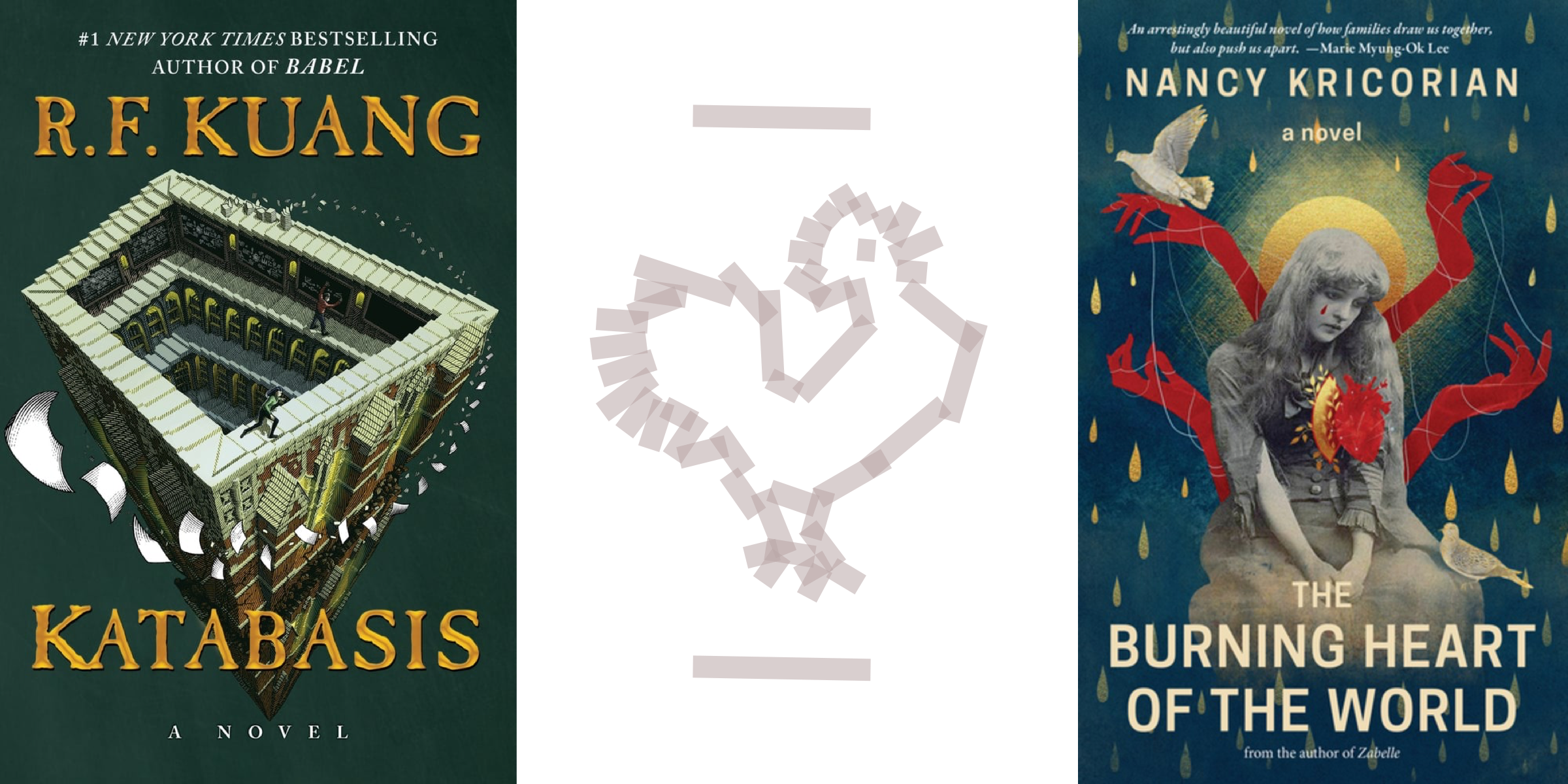
Katabasis
v. The Burning Heart of the World
Judged by Alex Brown
Alex Brown is a queer Black librarian, local historian, writer, and author. They are an Ignyte Award-winning and Hugo Award-nominated writer and critic who covers speculative fiction and young adult literature for Reactor magazine, Locus Magazine, NPR Books, Reader’s Digest, and elsewhere. They also write on topics such as queerness, Black history, librarianship, and pop culture. Known connections to this year’s contenders: None. / bookjockeyalex.com, Bluesky, Instagram
I need to start this with a confession. I don’t read literary fiction. For nearly 15 years, I have worked as a professional book critic specializing in science fiction, fantasy, and horror, in both the adult and young adult spheres; outside work, I dabble in romance and the occasional mystery or thriller, but for the most part I’m all spec fic all the time. It’s not that I have an aversion to litfic. Speculative fiction is, to me, at its best when it’s commenting on not just what the world is but what it could be (whether warning or clarion call). Sure, litfic does that too, but I’d rather get my social commentary with a heaping helping of witches and spaceships. I honestly can’t tell you the last time I read literary fiction that wasn’t of the YA variety until this tournament. Compared to R.F. Kuang’s Katabasis, reading Nancy Kricorian’s The Burning Heart of the World was like stretching an atrophied muscle.
The Burning Heart of the World opens when Vera is a child, jumps to the morning of 9/11 when she’s a married mother of two, then back to the early days of the Lebanese Civil War when she’s a preteen. She’s surrounded by family and friends, but they constantly slip in and out of her life as the war takes its toll. Vera longs for stability and connection, and by the time she gets it as an adult, the trauma from her childhood threatens to take it from her. As a child, she shuttles between bomb shelters, a relative’s residence, and her own home where her parents and grandmother argue about leaving for the US. She draws the attention of a soldier who sees her as an object to be used, and a boy her age who will come to resent her for escaping. What will her future hold in America? Years later, she confronts that same question again in the aftermath of the destruction of the Twin Towers.
Katabasis is set in the 1980s at Cambridge University. We enter Alice’s story after she opens a portal to Hell to retrieve her academic advisor, Professor Grimes, after she accidentally killed him. As the novel unfolds, we learn her motivations are murky at best, vindictive at worst. Alice has no lover, no partner, no children, no friends, no meaningful ties to family, only a tempestuous apprenticeship under her doctoral advisor and a fractured relationship with a classmate. She has cut herself off from everything beyond her magical studies so effectively that it takes several near-death experiences to realize that Peter, her traveling partner, collaborator, and occasional nemesis, offers her the connections she didn’t know she desperately longed for. Through each circle of Hell and the wastelands surrounding them, the two magicians battle bone monsters, ambivalent ghosts, and each other only to learn the real villains were the people they idolized as geniuses in spite of their obvious failings.
FROM OUR SPONSOR

Hell—the kind made by others and the kind we build for ourselves—is a recurring theme in both books. Vera grows up to become an artist, and when we meet her as an adult she is in the middle of a piece entitled Heaven and Hell Are in This World. She describes the bomb shelter she hides in as similar to Dante’s Inferno:
If the second level was purgatory, Vera imagined that the deepest level, where no one ever went, was a kind of hell where the rats had grown as big as dogs and fought over the scraps that the Devil tossed to them. Outside was also a hell where heavily armed men and boys were killing and dying.
After her father takes her brother to see a massacre, her mother argues “And if he told you he wanted to go to hell, would you take him there?” Too bad she wasn’t there to scold Peter for following Alice into Hell.
Hell is literal for Alice and Peter, but so too is the above world. Peter’s hell is Crohn’s disease, or, more specifically, how it makes him feel about himself. “But anything was better than being vulnerable. In Peter’s imagination, the moment anyone found out would be the moment Peter the Great’s reputation vanished, replaced by Peter the Sick’s. Peter the Invalid’s.” Alice’s hell is self-inflicted. She torments herself by denying herself sustenance and companionship as she strives for something she’s not sure she even wants. Both are also trapped in an academic hell built brick by brick over time by Grimes. There they are tormented—willingly and unwillingly—by his cruel indifference to others in his pursuit of greatness. Capital-H Hell is a concentrated form of Alice and Peter’s personal hells, just as that bomb shelter is a microcosm of the worst of Vera’s life.
Now comes the real question: Which book to choose? Do I pick the book that held no interest to me as a reader but thoughtfully covered a vital topic? Or do I pick the book that couldn’t stick the landing but took big, bold swings and was written in a genre I love? Do I pick the one that stuck the landing better or the one that I just couldn’t put down. Two great choices, both with things I loved and things I didn’t. One book left me feeling like hell is inescapable or a loop we must keep enduring while also trying to find moments of paradise. Another made me believe we can escape hell, whether one we create for ourselves or one we’re forced into, and that we can do it while helping those around us. In this case, stretching outside my comfort zone was a nice challenge, but not the most personally satisfying. This might be controversial, but the real world is real enough as it is; I’d rather have magic.
Advancing:
Katabasis
Match Commentary
with Meave Gallagher and Alana Mohamed
Meave Gallagher: This was always going to hurt me, Alana. I love R.F. Kuang, and I love Nancy Kricorian. Kuang is young enough to be, like, my daughter, which makes her ability to nail Western sexual politics of the 1980s—was it the canonically the ’80s? I got real Hillary-Clinton-on-the-campaign-trail-in-1992 vibes—to the wall pretty impressive. However, Kricorian is a vivid, beautiful writer, and an absolute legend in the Venn diagram of Armenian, American, and Palestinian activism. She’s made of steel and compassion, she’s seasoned, and in my opinion, she’s never gotten her flowers the way she deserves. Call me wildly biased—I often equate marrying into the Armenian diaspora to the stereotype of the religious convert’s zealotry—but I think The Burning Heart of the World tells an important story about the Lebanese Civil War from a perspective most people don’t get, and shows how generational trauma reverberates in ways the traumatized do and don’t realize.
I feel like one of Kricorian’s greatest strengths is restraint, while Kuang, though cutting, is baroque; I can imagine Katabasis version one being even longer before an editor took a pass at it. And while I did like Katabasis, because Clintonian feminism led to Girlbossing and we’ll never be free while we’re still demanding equal representation in the neolib/neocon status quo. “More female ICE agents” isn’t feminist, lol, and Kuang really has it out for—tell me how to say this less misogynistically—pick-mes. Which is legitimate! But in this moment in time, I’d like to hear some less known histories, rather than more critiques of identity politics from the ivoriest of ivory towers.
Alana Mohamed: Hello, Meave! I hear you, this was a rough one. Personally, I was rooting for Kricorian—The Burning Heart of the World delivered a number of gut punches that caught me off guard. I actually haven’t read Katabasis, so I’ll have to take your word for it re: beautiful takedown of Clintonian feminism. (Unfortunately I have been sucked into the lightly misogynistic lingo of today’s internet and can think of no pithy alternatives to “pick-mes.”) I guess you could say I understand her appeal but Kuang is just not my cup of tea. I was reluctant to start on yet another door stopper about Cambridge (but magic), so ha at “ivoriest of ivory towers.”
I do wonder what you made of the hell comparison Judge Brown makes. To me, “hell” wasn’t a central concept in The Burning Heart of the World the way it was in Katabasis, where it was the literal setting. There’s so much more in The Burning Heart of the World that tackles resilience, beauty, and what it takes to keep the soul alive. The book did not make me feel “like hell is inescapable,” but maybe that’s because I didn’t read Katabasis. Did it feel cheerier? Did the hell and magic of it all create distance that made it feel lighter?
Meave: I didn’t feel like Katabasis was “light,” neither in tone, nor in subjects, nor in settings, nor in conclusions. I’ll grant the ending is hopeful! Alice does “do the work,” to indulge in hideous modern therapy-speak, to free herself from this anti-feminist, misogynist mental prison. But I’ve been in the workforce since 1999, and I can’t remember a job where I didn’t experience at least light misogyny—and if anyone remembers anything about me from high school, 10 bucks says it’s some really ugly rumors that predicated almost all my friends dropping me—so the lack of distance between Alice’s non-magical experiences and mine were something I liked about the book. And again, that’s not subject matter I’d call light. I generally prefer SFF books that go wide in settings and plots while narrowing the distance between the themes and the reader.
Alana: Judge Brown ends the judgment saying, “the real world is real enough as it is; I’d rather have magic.” I cannot fault anyone for wanting a bit of magic in their lives, but I was sad to see that the magic and storytelling of The Burning Heart of the World did not resonate enough to be included in the judgment here. Personally, I think Vera’s life is rendered a bit more tragically in synopsis than in the book. (For one, her sweet first romance does not end in resentment! They have a very lovely parting as friends.) That said, I certainly won’t argue that The Burning Heart of the World delivers social commentary “with a heaping helping of witches and spaceships” as Judge Brown says they enjoy. You mentioned ICE agents before—how direct are the parallels Kuang is trying to draw?
Meave: Oh, Kuang doesn’t touch on immigration at all, in my recollection. I was just thinking more along the lines of her capturing the rise of the Hillary Clinton style of neoliberal Girlboss, which led to that godforsaken “I’m a woman of color, I am a mom, I am a cisgender millennial who’s been diagnosed with generalized anxiety disorder” 2022 CIA recruitment ad. It’s quoting the title of Audre Lorde’s famous 1979 speech without reading a word of it.
Alana: That ad is a grim cultural artifact, to be sure. I absolutely understand the need for a book that addresses the self-serving applications of radical theory in institutional settings. And if Alice is able to “breakthrough,” I can see why that ending would feel better. The Burning Heart of the World ends on a beautiful note (or that’s what I thought anyway), but it’s much more ambiguous.
Meave: If anyone’s interested, I posted some clips from The Burning Heart of the World audiobook on Bluesky while I was reading it, and Nancy Kricorian—WHO FOLLOWS ME—replied, so I asked her about her research process for the novel, and she said while she obviously used many sources, she particularly recommended Sitt Marie Rose, a 1982 novel by Etel Adnan, translated from the French by Georgina Kleege and published by The Post-Apollo Press. I just received a used copy this week that I’m waiting to have time to read, since it’s not at any of my libraries; you can find a new copy through Litmus Press. Etel Adnan sounds like she was cool as hell in her own right: a prolific lesbian writer, poet, playwright, and artist, and Chevalier des Arts et des Lettres. Note: I got that link to her incredible essay through Kricorian’s interview of war photographer Aline Manoukian in Hyperallergic (the Armenian diaspora is mighty), who took that famous photo of a PLO fighter in Burj el-Barajneh, Lebanon, holding a kitten, in 1988.
The thing I love about The Burning Heart of the World, besides it being at the nexus of so many of my interests, is that I know Kricorian did deep research into voices and perspectives that we in the west, the Occident, don’t usually hear from—or want to listen to—and writes them into a novel that is beautiful and moving, and real, while the story itself is fiction. This feels very old school, with so much autofiction or near-autofiction washing around, people writing what they know to such an extent they’re curled like dead shrimp, nose to navel. But I appreciate starting from a place where you have an interest in knowing more, and going from there.
Alana: That is really a fantastic interaction! Nice to know the internet is still good for something. What a great recommendation. Adnan has produced so much, I would absolutely go down that rabbit hole. I love hearing about author research processes—from what I recall Kuang is also big on research. I bet researching a book set in hell makes for a great reading list.
Meave: True. If she weren’t so damn famous, maybe you could casually ask her about her research materials, too. But to be fair, I haven’t tried, either, as I’m not secretly trying to get her to bring my husband into her diaspora circles to reconnect with his heritage lol.
Alana: Nancy Kricorian x Meave’s husband? Collab of the century! Kricorian-hive, let’s make it happen. In any case, it seems like this was a tough matchup between two very good books! If Katabasis takes the win, maybe Kuang will share her research secrets with us. Until next time, folks!
Today’s mascot
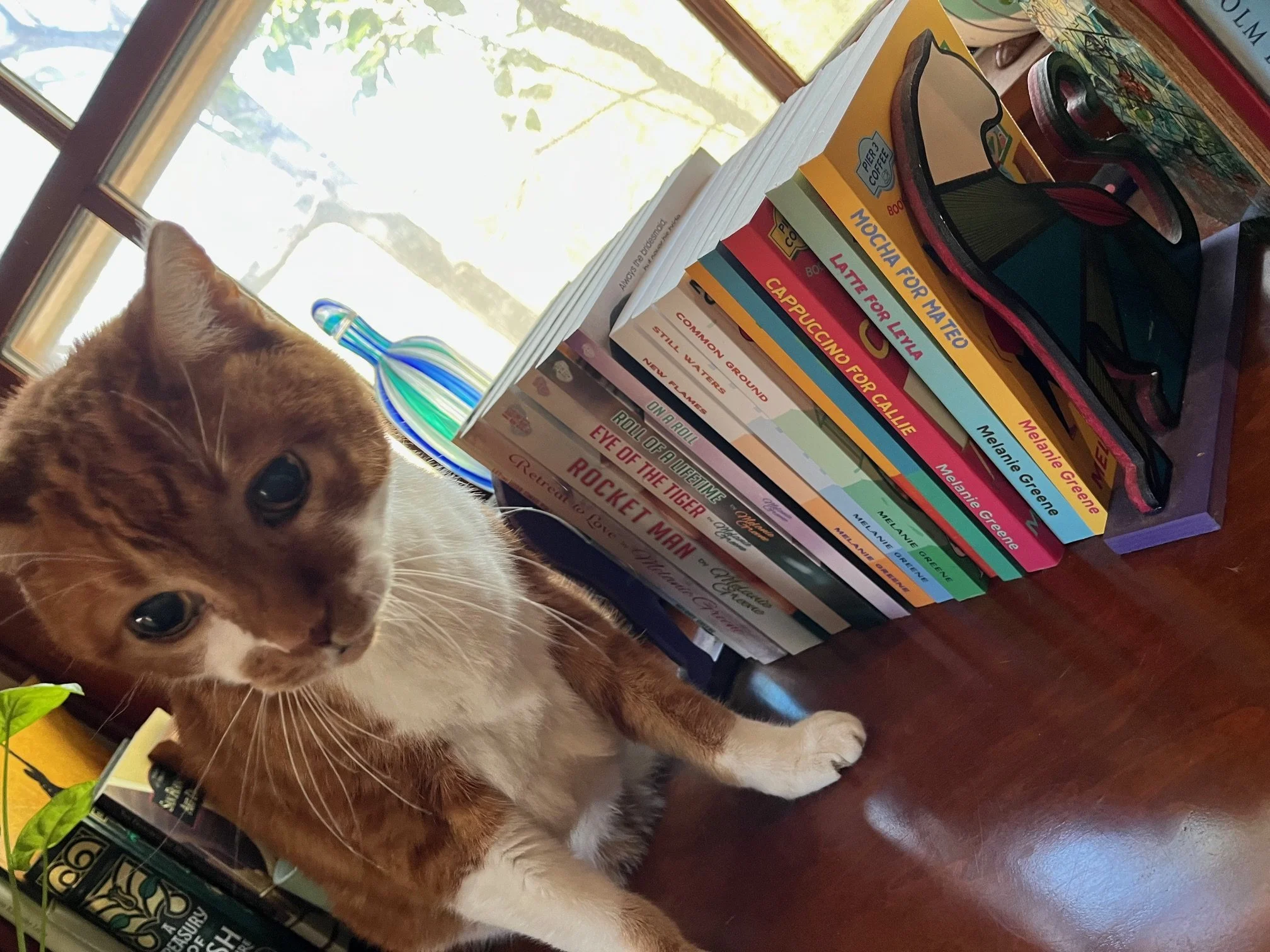
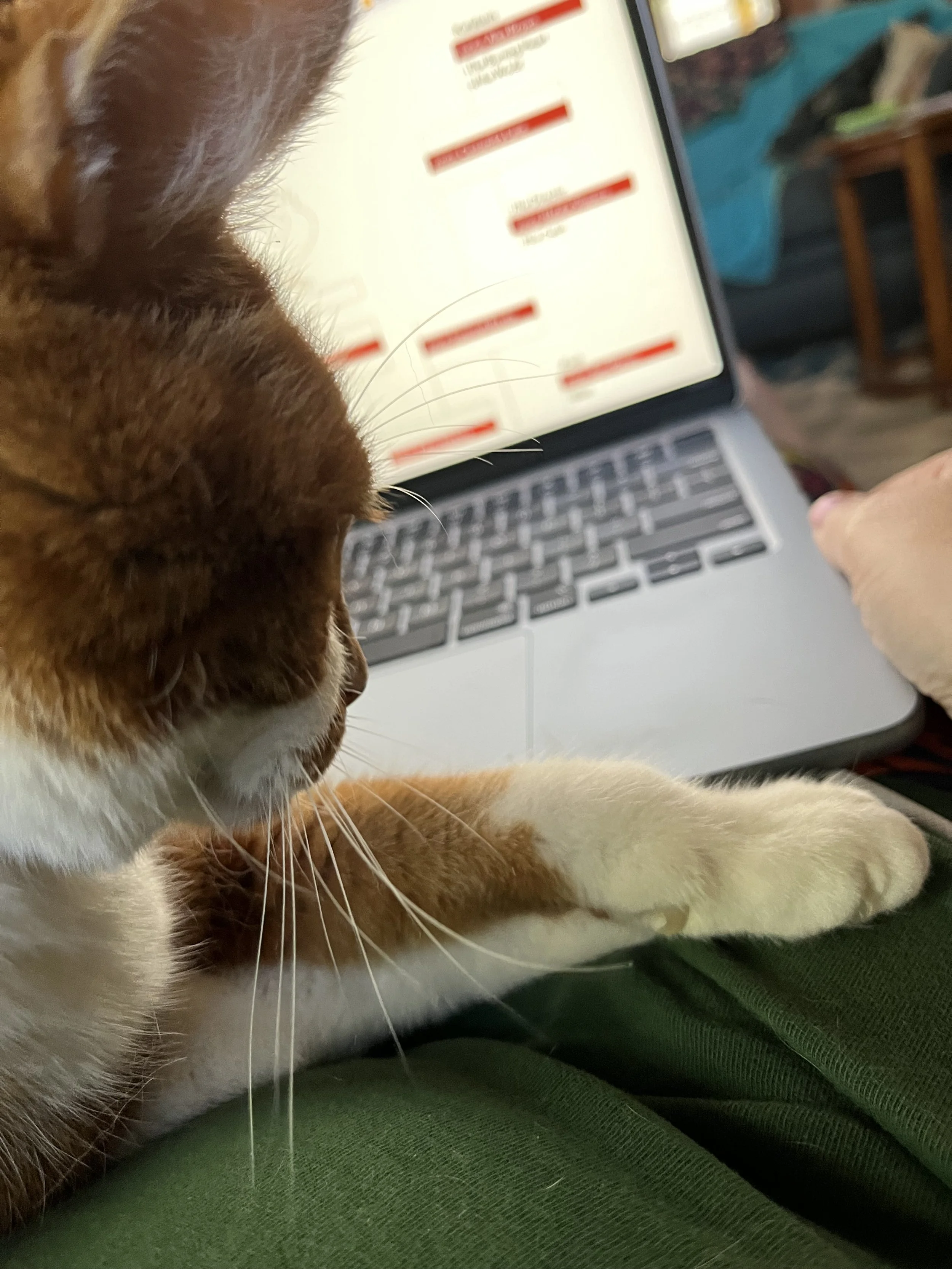
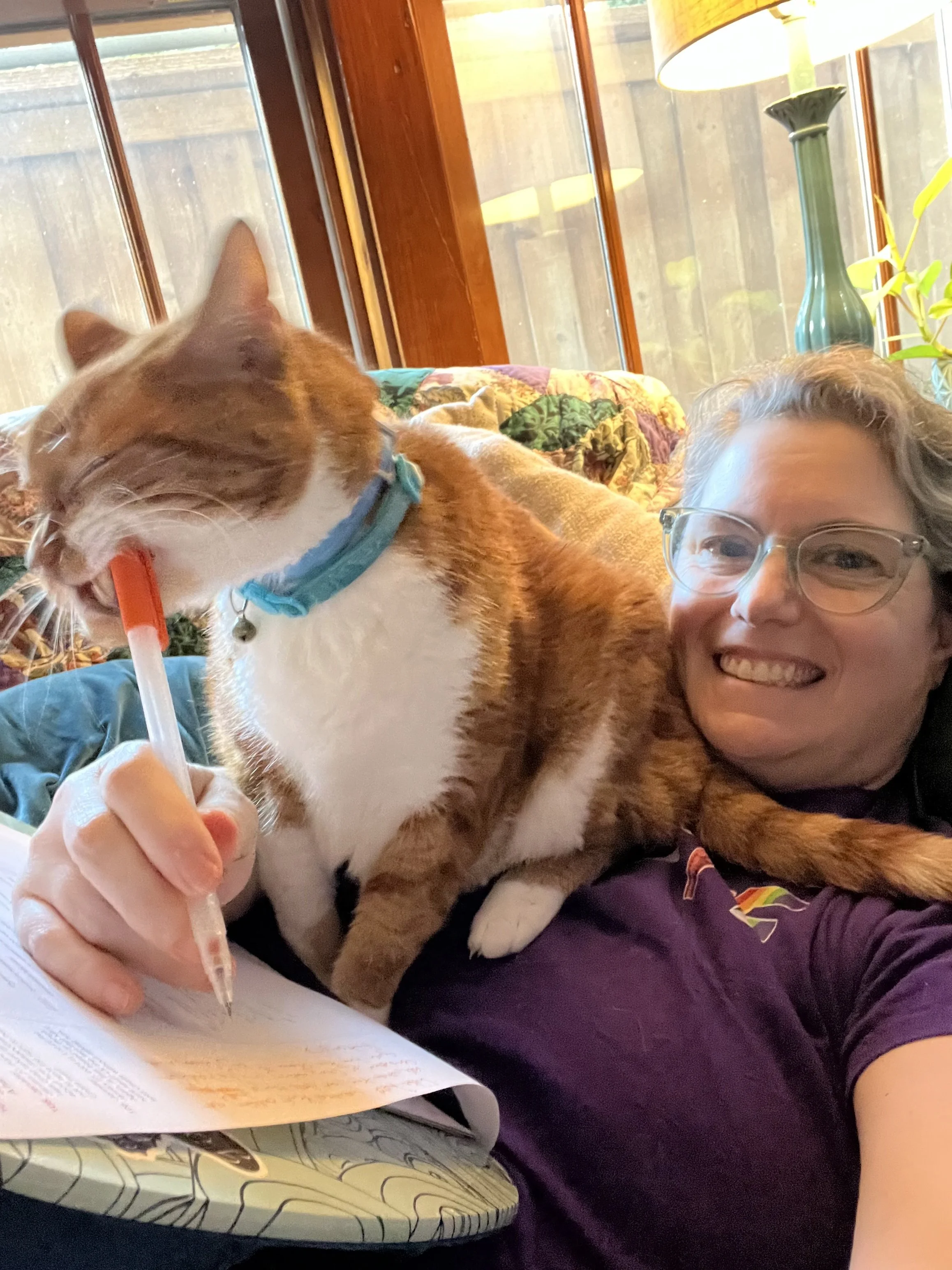
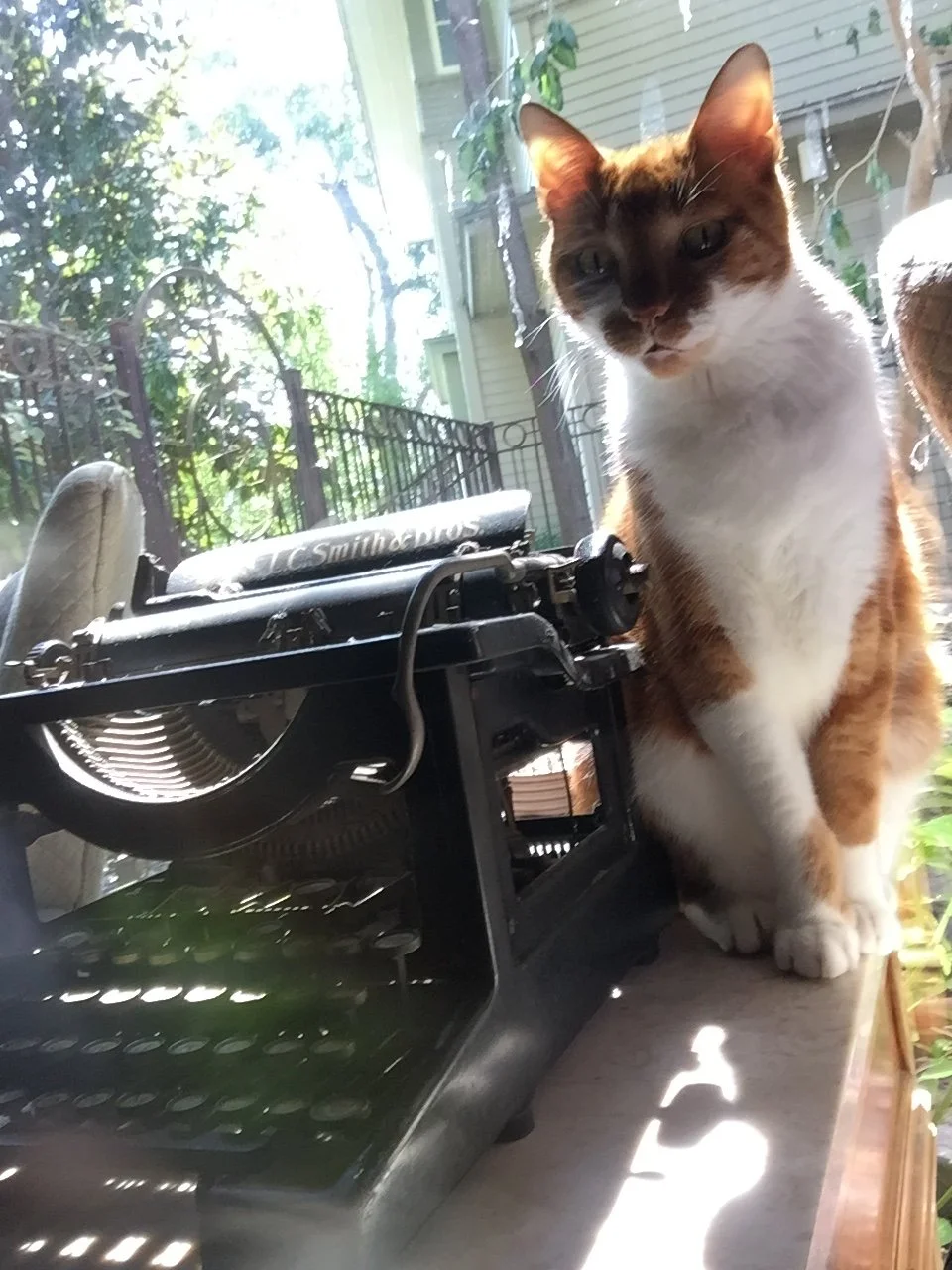
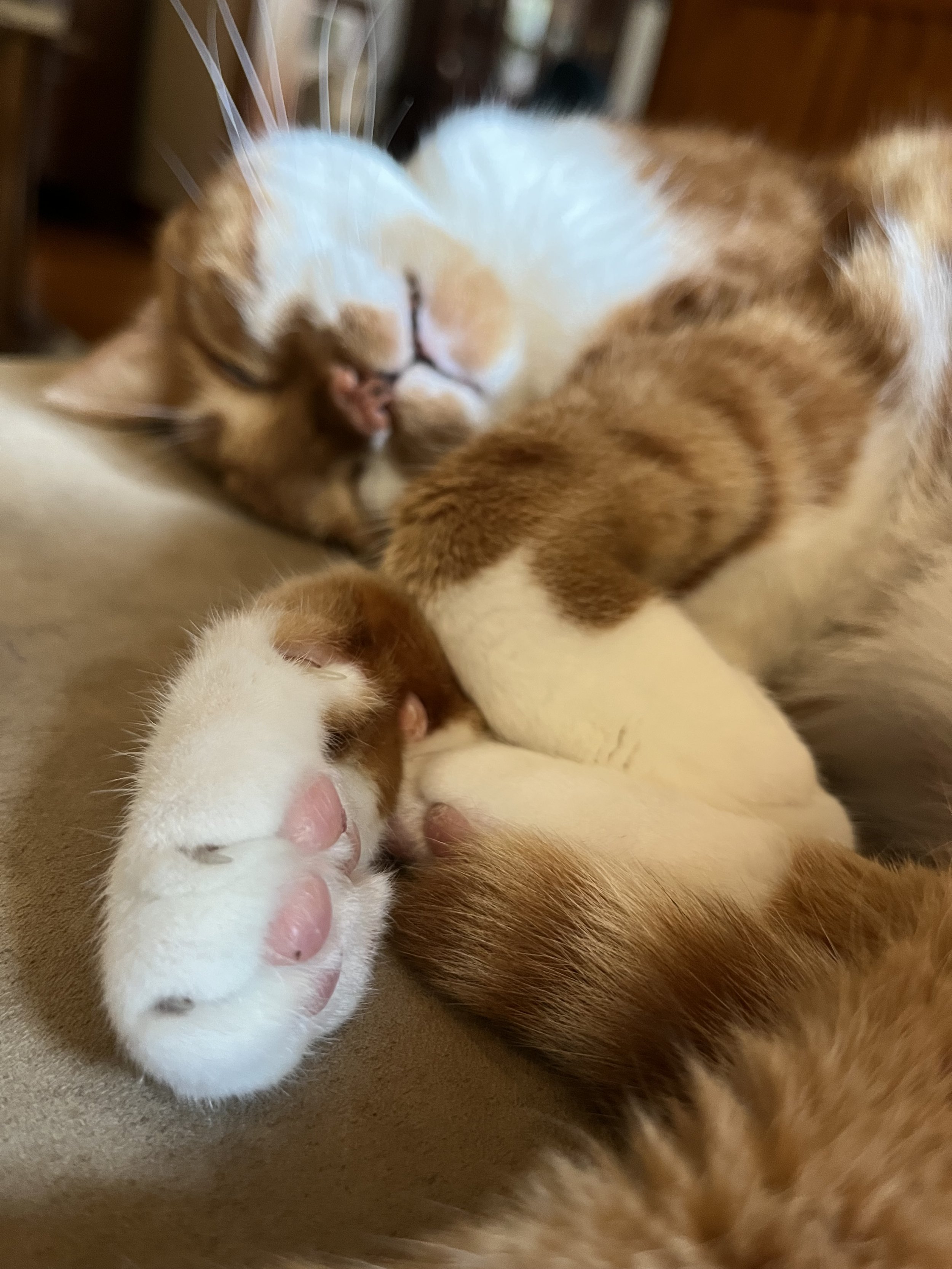
Nominated by Melanie, today’s mascot is Patrick, who is as old as the Rooster awarded to The Brief Wondrous Life of Oscar Wao. His long, wandering life has him, in his old age, roaming as far as from the sun room to the living room. An ardent editor, he makes sure to insert himself as closely as possible when Melanie’s writing books, and takes full credit for all the fine fictional cats she’s portrayed over the years. When making his ToB 26 bracket, he favored The Buffalo Hunter Hunter, because that shaggy pelt on the cover looks like a very cozy spot to curl up. Also: Eating everyone is a good idea.
If you’re interested in nominating a pet as a mascot for this year’s Tournament of Books, contact us for more details. (Please note, this is a paid program.)