
The Ten Year Affair v. If You Love It, Let it Kill You
presented by

MARCH 18, 2026 • OPENING ROUND
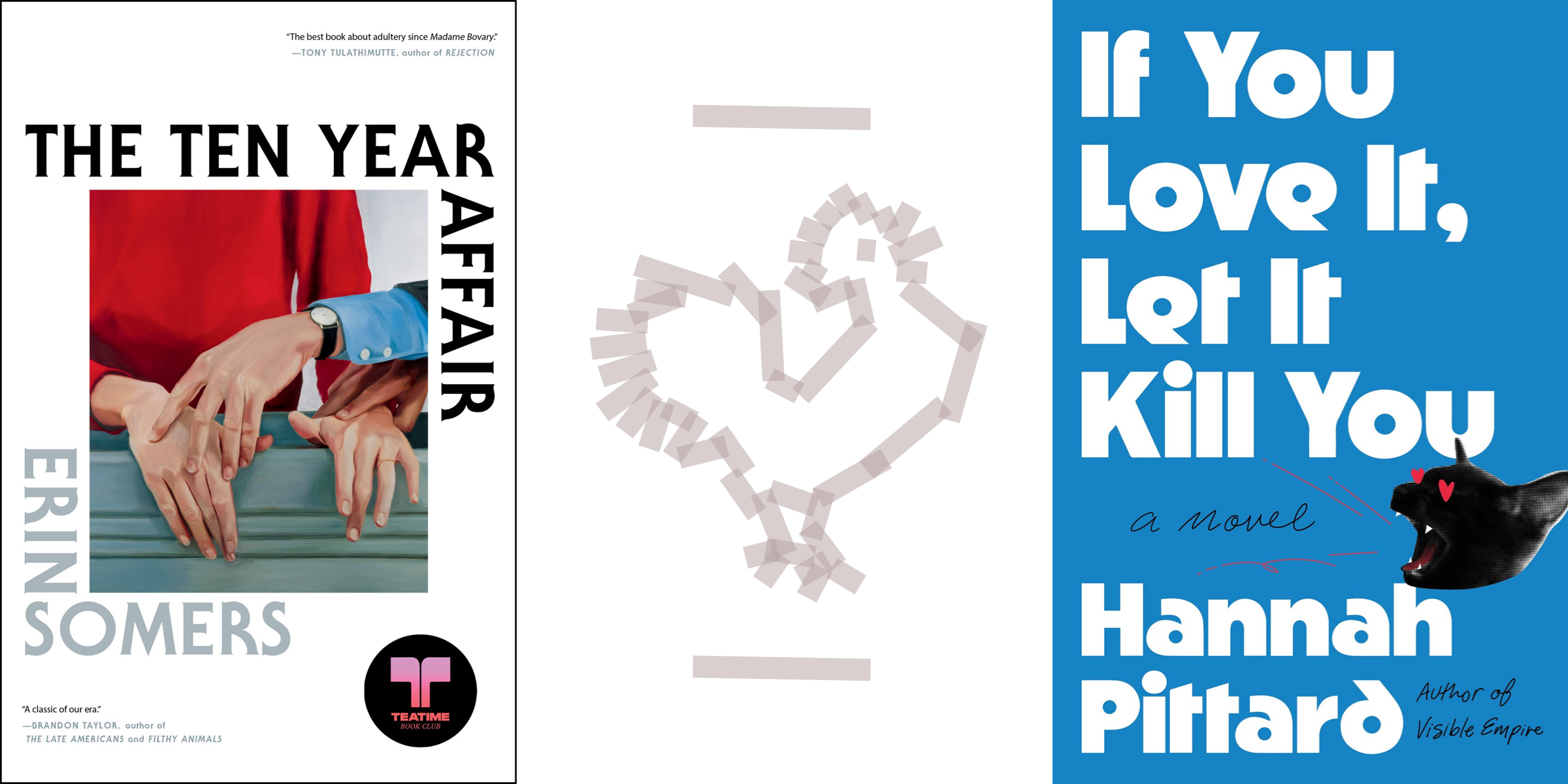
The Ten Year Affair
v. If You Love It, Let it Kill You
Judged by Lilliam Rivera
Lilliam Rivera is an award-winning author of nine works of fiction: a dark thriller, four young adult novels, three middle-grade books, and a graphic novel for DC Comics. Her books have been awarded a Pura Belpré Honor, been featured on NPR, the New Yorker, the Los Angeles Times, the New York Times, and multiple “best of” lists. Her latest novel is Tiny Threads by Del Rey Books. A Bronx, NY, native, Lilliam currently lives in Los Angeles. Known connections to this year’s contenders: “I am friends with Angela Flournoy.” / lilliamrivera.com
If I were tasked with throwing a party for the chaotic protagonists in these two books, the first song I would spin would be Talking Heads’ “Once in a Lifetime.” Partygoers would be forced to menacingly point at each other and scream: “This is not my beautiful wife!” Centering around the institution of marriage as a weak facade of bullshit, novels If You Love It, Let It Kill You and The Ten Year Affair cleverly hit most of the messy relationship buttons. I was fully locked in to read about the disturbing after-effects of divorce cloaked with middle-age menopause mania that sends everything off-kilter and the inanity of being in a partnership long enough where the routine of everydayness feels like a nightmare. Let me get into all the malaise, let me swim in it.
If You Love It, Let It Kill You is a novel about Hana P., a divorced, childless academic teaching at a university in Kentucky, living with her academic partner, and raising a preteen stepdaughter. Everything seems pretty chill in her universe until she learns her ex-husband has written a debut novel that includes a version of her being killed. Cue David Byrne singing, “How did I get here?” Our protagonist goes on a wild journey of questioning everything, welcoming in an unrelenting unease that is both hilarious and embarrassing in its depiction of its awful truths.
The book is considered metafiction (get the gist of the literary drama here or here!) and I’m here for the dragging of everyone: of ex’s, of the current partner, even of aging parents. Go all in. “I am in the lost hour, the skipped hour. I am alone, without a child, and it’s all happening too quickly, and it couldn’t be over too soon.” As a mother of two grown-ass children, this examination of choices rings true. Yes, definitely, yes. The stream of consciousness writing gets dark and dirty, traversing back to her first marriage, her overly dependent father, and creative writing students that are hilariously depicted as a collective voice. “Is there any story you can tell us during which we are allowed to look at our phones?” The students are cringy but oh so familiar.
FROM OUR SPONSOR

There were times when the spiraling, inner dialogue felt bogged down with its meandering, but the prose really shines best when it gets weird. A perfect example is when Hana finds a lost cat that offers her advice, thus giving the book a Master and Margarita by Mikhail Bulgakov vibes. I just wish there were more of it. More philosophical talking animals. More unraveling without tidy explanations.
Meanwhile, The Ten Year Affair takes on lower-middle-class despondency. Cora is a mother of two who works at a hybrid marketing job and is married to a depressed husband who spends a lot of time not fucking her. The couple really can’t afford the Hudson Valley house they moved into from Brooklyn, like so many of their neighbors, nor the two kids they have, but they are trying. All the while, a mushroom grows in the bathroom. Cora accepts things until she meets Sam at a local baby group. The father is hot because he chews a cinnamon-flavored toothpick and the chemistry between them is on like Donkey Kong.
“Can’t we just be friends? It’s sad to me the idea of not knowing you.” Boy, what?!? The way my face fell when Sam denied Cora’s proposal of sex. With that scene follows the introduction of two timelines: Cora’s fantastical dream of having an affair with Sam paralleled with the basic humdrum reality of her life. As the years go by, the fantasy becomes more elaborate in its machinations. (They secretively meet! He tells her what to wear! They have orgies in international hotels!) Both worlds are great in showcasing the intense cultural attitudes toward domestic life such as when an annoying mother in their baby group forces their child to urinate on the spot to prove some crazy point.
The Ten Year Affair is a flipped The Ice Storm by Rick Moody with Hudson Valley as the incestuous town. Every character is craving something, or someone else, and at times performing empty roles. I couldn’t get enough of the smart social observations such as when Sam’s wife Jules, a very Type A personality and ambitious in ways Sam, even Cora, are obviously not, tells a joke to Cora before relaying the same story again to a wider group. Did I feel completely seen in this? Yes! How many times have I auditioned an anecdote with my friends before transferring it over to social media and how unbelievably stupid all of that is? While The Ten Year Affair told on me in ways that felt embarrassing yet forgivable, If You Love It, Let It Kill You was more angry in its confession. The mirror Hana P. held up was too harsh and ruthless, which may have been the point, but I still wanted a little grace for the character. There are also the different ways men were portrayed in the novels. In The Ten Year Affair, I didn’t hate them even when they displayed loser, midlife qualities (Sam buying an old Mercedes to convert it to biodiesel!) whereas If You Love It, Let It Kill You bros are creepy and manipulative to the point of pissing me off. It’s not cute to have a father send you a text that reads: I’m a lonely dude. My second ketamine experience is today. Sir, do everyone a favor and step away from that phone.
Both novels are definitely welcomed into my Mami group chat but it was The Ten Year Affair that I found myself leaning in closer and busting out laughing. The book doesn’t linger in the escape but in how the attractiveness of flight can be in itself a mirage. “Over and over, you had to commit to the task of living. You had to insist on resilience, spring back from defeat.” For Cora, and maybe for many of us, “letting the days go by” doesn’t have to mean purgatory. Let the song to end this party be Rosalía’s slow jam “Magnolia” about death and rebirth, because if I learned anything from these books is that relationships will try to kill you, if you let them.
Advancing:
The Ten Year Affair
Match Commentary
with Meave Gallagher and Alana Mohamed
Alana Mohammed: As someone who lives a completely different life in her head, I, too, felt seen by The Ten Year Affair. I’m ultimately glad it won today, but the premise got dull quick.
Meave Gallagher: Alana, I hated The Ten Year Affair. Hated it so much. It has a decade-long imaginary affair and at least two real affairs, and is there anything more tedious than a bunch of economically comfortable, straight white married couples, two kids each, so self-obsessed that one character doesn’t even realize another considers her her best friend?
For example, when Cora was describing her book club, I get that it was supposed to be Somers satirizing suburban women trying to “better” themselves by reading “literature” but not engaging with the literature they choose, or choosing the books to “perform” being readers or whatever, but I thought it was mean and kind of hack material? So much of this allegedly modern novel had such weird ’90s sexual politics. “Men are like this. Women are like this.” And Cora substituting not having sex with her husband for how many years by having an imaginary affair? What kind of marriage survives so long with so much lying—or, being generous, “avoiding communication?” It depressed me. And made me angry with both of them for refusing to try.
Alana: I think Judge Rivera was specifically referencing the workshopping-a-joke thing versus the wider novel with her comment, but I totally agree that making fun of women’s reading groups is a hack move. I took the regressiveness of Cora’s observations to be indicative of her own failings. I believe the youth would say Cora displays a lot of “pick-me” behavior—she can’t stand to think that she’s the same as the rest of the women in her cohort. (Don’t she and her husband try to assure each other they’re not lame like everyone else early on?) Which sets her down the pedestrian path of suburban adultery with a lackluster man mired in resentment.
Meave: I had no idea about the IRL backstory of If You Love It, Let It Kill You, but niche gossip is something else I’m also just…over. So many Massive and Terrible Things have been happening so rapidly in the world, even on our own doorsteps—two books with protagonists living so much in their own heads their reaction to anything happening outside themselves is “But how does this affect me?” were hard to take.
Alana: I was more annoyed by If You Love It, Let It Kill You, but wondered how much of that was my own hangup. I also thought it was interesting that Judge Rivera felt sympathetic to the men of The Ten Year Affair but repelled by the men of If You Love It, Let It Kill You. For me it was the opposite! I hated Sam very deeply from almost the very start and found his behavior to be much more insidious than Hana’s father.
Meave: Sam’s a having-his-cake guy if ever there were one. I thought Hana’s bald boyfriend was a decent dude who tried to balance her family’s total lack of boundaries with his need to provide a stable home life for his daughter. Alternately, I’m misreading it because I’m so sick of reading about characters like these: unoriginal, uninteresting, unfunny.
Alana: I did enjoy The Ten Year Affair, but you’re right that the story isn’t very original. Throughout the novel, I was vaguely reminded of that Meryl Streep movie Falling in Love, in that it concerns two Hudson Valley families and an affair. In that movie, though, the affair is short and delightful, whereas Somers strips all the sweetness away.
Meave: Do you think it’s possible to bring something new to the genre? You think in a couple years we’ll get a novel about how the book club and wine moms got radicalized and joined CODEPINK?
Alana: I would read the radicalized wine moms book if anyone out there wants to write it. The Baffler recently had a fiction piece about a nice Brooklyn dad getting involved in a plot to kill Henry Kissinger that was fun. Perhaps change is coming?
Meave: Well, chat, we’ll leave it to you. Kevin, since this is the end of the opening round, could you give us a look at the Zombie standings?
Kevin Guilfoile: Thanks Meave! For those new to the Rooster let me explain how the Zombie Round works. Prior to the Tournament, we asked readers to vote for their favorite novels on the shortlist. When the bracket is whittled down to just two books, we will bring back the two most popular novels from the books that have already been eliminated, and our presumptive finalists will have to battle past these reanimated books in order to get to the championship.
From this point on, after each match, we will update the Zombie results, which could change as more books are eliminated.
If the Zombie Round were held today, our Walking Dead Trees would be The Buffalo Hunter Hunter and The Burning Heart of the World. That means, unfortunately, we must say goodbye for good to Blob, The Director, If You Love It, Let It Kill You, Metallic Realms, The Mind Reels, Too Soon, We Love You, Bunny, and What We Can Know.
The quarterfinals kick off tomorrow as Vijay Khurana’s The Passenger Seat meets Endling by Maria Reva.
The merch table is open
Your purchases help support the Tournament of Books—plus, get 50% off all items when you become a Sustaining Member.
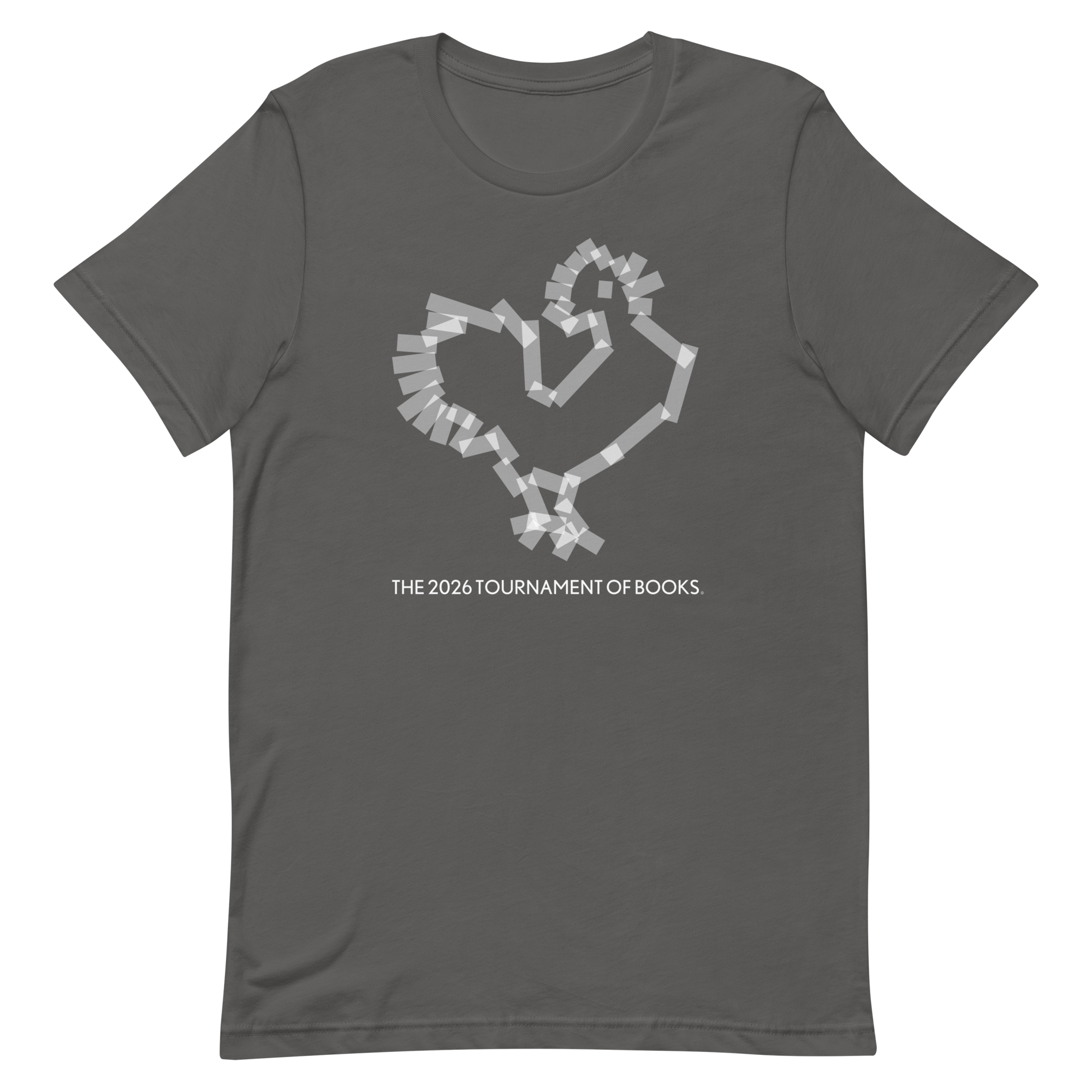
Wear your allegiance to literary bloodsport with pride. Plus, receive a 50% discount on this item and everything in our store when you become a Sustaining Member.
Unisex fit / soft and lightweight / 100% combed and ring-spun cotton (heather colors contain polyester)